


Where to Buy: Free Standing Vented Propane Heater Suppliers
Finding reliable suppliers for free standing vented propane heaters requires careful evaluation of product quality, service capabilities, and industry certifications. Whether you're a retailer seeking competitive wholesale pricing, a rental company prioritizing durability, or a procurement manager handling bulk orders for corporate clients, selecting the right supplier directly impacts your operational efficiency and customer satisfaction. This guide helps you identify trustworthy manufacturers and distributors while providing insights into procurement strategies tailored to your specific business needs.

Understanding Free Standing Vented Propane Heaters
Free standing vented propane heaters have been shown to work well in places that need a lot of heat without affecting the quality of the air inside. Through protected venting systems, these devices send combustion waste outside. This makes them perfect for professional settings, rental businesses, and large-scale uses.
How Vented Propane Heating Works
Propane moves to the burner unit through a pressure-regulating valve. This starts the burning process. The fuel and oxygen are mixed here, and when they light, heat is created that moves through a heat exchanger. Unlike models that don't have vents, these units have venting tubes that take all waste gases, like carbon dioxide and water vapor, outside. This design keeps the air quality inside at its best while providing even warmth over 10 to 30 square meters, based on the BTU output.
Key Advantages Over Unvented Models
Free standing vented propane heaters are safer because they handle pollution better. The sealed venting keeps moisture from building up and oxygen from running out in closed spaces. This makes them perfect for long-term use in businesses where people stay for hours at a time. Also, venting systems are required for business uses in many places, so they are always in line with the rules.
Typical Applications in Commercial Settings
Rental companies like these heaters for camping sites and outdoor event areas where guests want to be comfortable without sacrificing style. They are sold in sporting goods stores so that customers can get them ready for camping trips or tailgating events. Corporate clients use them in temporary buildings, outdoor gathering places, and as backup heaters when the power goes out. They are used by the government in emergency aid efforts where reliable heating must work even when there is no power.
Criteria for Choosing the Right Supplier
Working with the right maker or distributor will help your business run smoothly and make sure that your free standing vented propane heater inventory meets high standards.
Essential Certifications and Standards
Look for suppliers who have ISO 9001:2015 quality management certification. This shows that their manufacturing processes are consistent. Products should meet safety standards that apply to the markets you want to reach. For example, if you want to sell your products in Europe, they should have a CE mark. If you want to sell them in Canada, they should have a CSA mark. These qualifications show that heaters are put through a lot of tests to make sure they work safely in a variety of situations.
Product Range and Customization Capabilities
A good supplier offers a range of configurations to meet the needs of all of their customers. Portable models are good for rental businesses that need to move things around a lot. For long-term use in camps or resorts, wall-mounted or fixed-base units work best. With output levels between 8,000 and 15,000 BTU, they can cool anything from small tents to big business areas. If you're looking for white-label partners or OEM deals, find makers that let you change the style of the housing, the control interfaces, and the packaging so that it fits with your brand.
After-Sales Support and Warranty Coverage
Comprehensive support protects your investment after you've bought it. Reliable suppliers offer at least a one-year warranty that covers problems with the way the product was made and broken parts. Your repair team can quickly service units if they can get new parts like burner assemblies, thermocouples, and pressure valves. Technical help from staff who know what they're doing helps solve problems before they become expensive ones. For rental companies with big trucks or stores that promise great customer service, this support is especially helpful.
Top Free Standing Vented Propane Heater Suppliers in 2026
There are both well-known names and new companies on the market for free standing vented propane heaters right now, each with their own competitive benefits for different types of buyers.
Established International Brands
Rinnai is known for making efficient direct vent heaters, especially ones that are made for home and light business use. Their engineering is focused on getting the most heat out of each BTU used, which means lower long-term costs. Portable units made by Mr. Heater are popular with camping stores and individual customers, making him the market leader in outdoor recreation. Their transportation networks all over North America make sure that they can quickly get more stock.
Dyna-Glo specializes in models with higher outputs that are good for workshops and construction sites where tough construction is needed to handle rough conditions. Coleman has been a well-known brand in outdoor gear for decades, which makes it easy for sports goods stores to sell their heaters. Empire aims to provide wall-mounted vented heaters for permanent installs that are made to work nonstop in business settings.
Emerging Asian Manufacturers
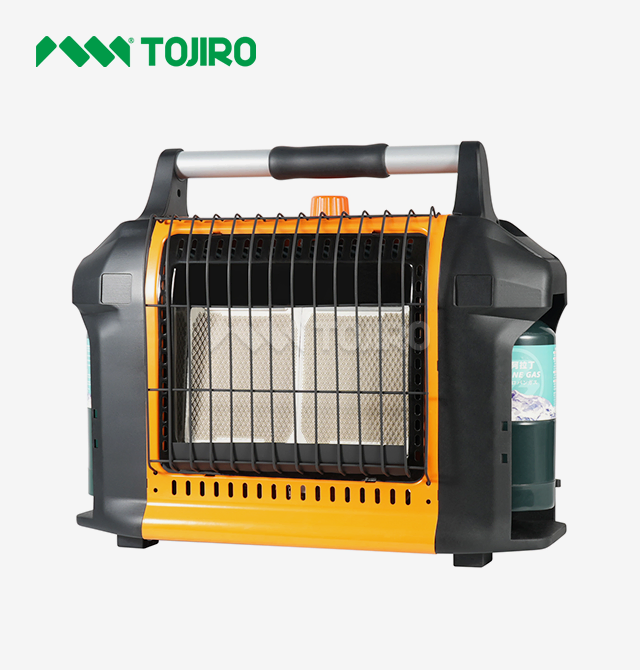
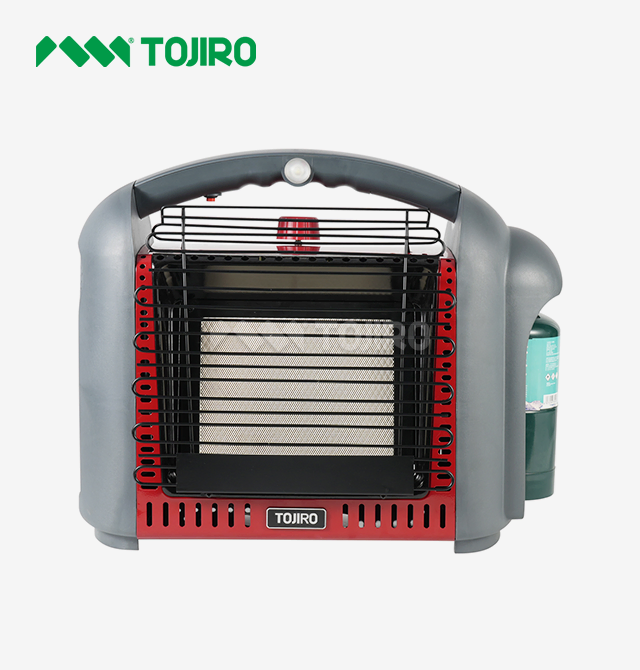
TOJIRO Electric Appliances has been making appliances for 20 years and can make them exactly how you want them. Every year, our factory in Zhongshan makes more than a million heating units for sales around the world. The GH25-9B type is a good example of how we work. It has a 2600W burner assembly that puts out 9,000 BTU and is made of strong cold-rolled steel. This design works with different types of fuel, like propane cylinders, butane canisters, and LPG. This gives rental companies that serve a wide area more operational flexibility, which they value.
The unit has three types of safety features: tilt sensors that stop gas flow if it is knocked over, oxygen depletion sensors that put out flames when air quality drops, and pressure-regulating valves that keep the unit working at a steady level. These features handle safety issues that are very important to institutional and corporate buyers. We can meet bulk purchase deadlines with a minimum order of 1,000 pieces and a 45-day production cycle. We also offer OEM packing and branding customization.
Comparing Value Propositions
When comparing suppliers, you should look at their total cost of ownership instead of just their unit price. For sales that are bigger than the minimum quantity, volume savings make the cost per unit much lower. Some manufacturers let you spread the cost of delivery over several milestones, which makes it easier to manage your cash flow. Think about how long it will take to ship. Domestic suppliers may be able to get it to you faster, but the unit cost will be higher. On the other hand, if you can wait for longer lead times, foreign makers may offer lower prices.
How to Procure Free Standing Vented Propane Heaters Efficiently
Smart buying methods get the best value for money while reducing risk and downtime for your free standing vented propane heater procurement.
Direct Manufacturer Relationships
When you buy straight from factories, you skip the markups that distributors add, which could cut the price of big orders by 15 to 30 percent. This method works best when you have clear instructions and want to order more than 500 to 1,000 units. Direct relationships also make it easier to talk about customization, like changing the size or shape of the housing or adding control features that make your product stand out. But you'll have to handle international shipping and quality checks by yourself, which will make the buying process more difficult.
Specialized Distributors and Wholesalers
Distributors keep goods in stock so they can be sent out right away. This is great when you need to quickly restock or see what the market wants before placing a large order. They usually work with more than one brand, so you can compare specs side by side. The markup covers their storage and shipping services and usually adds 20 to 40 percent to the manufacturer's price. For this extra cost, you get convenience and freedom: you can order different amounts of different products and change the amount of inventory based on how demand changes with the seasons.
Online B2B Marketplaces
Buyers and sellers from all over the world can meet on sites like Alibaba and Global Sources. These markets are good for finding new suppliers and comparing prices. There are long lists of products with details, certificates, and ways to get in touch with the company. But it takes work to make sure a supplier is who they say they are. Look at their business licenses, ask for audit reports from factories, and think about using escrow payment services until you can trust them. A lot of smart buyers use marketplaces to find possible business partners and then visit the facilities before placing large orders.
Negotiation Strategies for Better Terms
When you commit to buying a lot, you can get the best prices. If you can commit to buying more than 2,000 units a year, you can discuss tiered price, which lowers the cost per unit at certain volume levels. Ask for guarantees that cover more than the usual coverage, especially for important parts like safety sensors and burner assemblies. Ask about bundled services. For example, some makers offer installation training or marketing tools to help you make sales. For big sales, look into payment plans that work with your cash flow, like putting down a deposit when you place the order and paying the rest when the goods are delivered.
Ensuring Safe and Efficient Use Post-Purchase
To get the most out of your free standing vented propane heater performance and lifespan, pay close attention to the best ways to setup, maintain, and use it.
Proper Installation Guidelines
Free standing vented propane heaters should be put on stable, level areas that are away from things that can catch fire. As stated in the manufacturer's instructions, keep at least 24 inches of space between the machine and flammable walls and 36 inches of space above it. Vent pipes must go to outside walls using allowed materials and end in places that stop smoke from going back into the system. In many places, qualified contractors are the only ones who can install vents. This makes sure that local building rules are followed. If you rent out units, make installation checklists so that crews can set them up safely and regularly at different places.
Routine Maintenance Protocols
During times of heavy use, check the burner parts once a month and clean any dirt that builds up around the orifices. Check thermocouple sensors to make sure they work right; these parts stop the flow of gas when the flames go out. Every year, check the vent pipes for any blockages, corrosion, or seal wear that could let exhaust leak out. Replace pressure-regulating valves when the maker says to, which is usually every two to three years, but it depends on how often they are used. Keeping detailed records of maintenance helps find patterns that point to worn-out parts before they break.
Optimizing Fuel Consumption
The right size keeps you from wasting money—a heater that is too big turns on and off a lot, using more fuel than it needs to. Use the manufacturer's instructions as a starting point to match the BTU output to the space volume. Thermostatic settings keep temperatures at the right level without having to be adjusted by hand. This saves 20 to 30 percent on fuel compared to running units at full power all the time. If you can, put heaters in the middle of rooms to make the heat spread out evenly and reduce the amount of heat needed for comfort. For rental operations, teaching customers how to run efficiently will help them save money on fuel costs.
Conclusion
In order to find the best free standing vented propane heater provider for your company, you must weigh the quality of the products, the prices, and the level of customer service. There are solutions available from many suppliers that can meet a wide range of needs, such as the need for customization for white-label programs, the need for fast inventory turnover to serve retail customers, and the need for extreme durability for rental fleets. Thoroughly checking out suppliers, negotiating strategically, and sticking to best practices after the buy are all parts of successful procurement. These best practices extend the life of tools and keep customers happy.
FAQ
1.How Do I Verify a Supplier's Reliability?
Ask for copies of ISO certificates and reports from reputable labs that test the products. Check the papers that show your business is legally running to make sure they are correct. Talk to current customers—reliable suppliers will give you names of happy customers who are happy to talk about their experiences. Look at your online presence, such as your business's website, listings in industry directories, and customer reviews on business platforms. If you're really interested in a supplier, you might want to visit their facilities and see how they make things and make sure they meet quality standards for each free standing vented propane heater.
2.What Warranty Coverage Should I Expect?
For one year after the buy date, standard guarantees cover problems with the way the product was made. Burner assemblies, safety monitors, pressure valves, and heat exchanges are the most important parts for safe operation, so make sure that they are covered. Make it clear what the guarantee doesn't cover, which is usually damage caused by improper installation, illegal changes, or standard wear and tear. Learn about the claims process, including who pays for the return shipping, how long it takes to fix the item, and whether you get replacement units while the item is being fixed so that your inventory doesn't get stale.
3.Can Suppliers Customize Products for Private Labeling?
There are a lot of companies that offer OEM and ODM services for orders that are at least 1,000 to 2,000 units. You can change things like the color of the housing, the layout of the control panel with your name, the design of the package, and even the specs, such as the BTU output or the fuel fittings. Talk about intellectual property protections that will keep your custom designs unique to your brand. Customization will add two to four weeks to the lead time while the tools are being made and the sample is being approved.
Partner with TOJIRO for Your Vented Propane Heater Supply Needs
EVERY free standing vented propane heater source connection TOJIRO makes is based on our 20 years of experience making great products. Our ISO 9001:2015-certified factory makes heating solutions that combine the accuracy of Japanese craftsmanship with the efficiency of modern engineering. Our GH25-9B model shows what we can do—it has a 9,000 BTU output, three safety systems, and can work with different types of fuel, such as propane, butane, and LPG.
We know that business-to-business (B2B) buying needs competitive prices, reliable delivery schedules, and quick customer service. Our base order number of 1,000 units and 45-day production times work for retailers, rental companies, and business buyers who need to plan ahead. Full OEM and ODM services let white-label partners set their products apart by customizing them and giving them their own package. Each unit comes with a one-year warranty that covers replacement parts and technical support.
Our team works together to make sure that the specifications we provide meet your operational needs, whether you're adding to your rental fleet, stocking stores in multiple markets, or providing for corporate hospitality projects. Email us at [email protected] to get product lists, talk about how to customize them, or get quotes that are based on your number needs.
References
1. Johnson, M. (2023). Industrial Heating Equipment Procurement: Best Practices for Commercial Buyers. Manufacturing Technology Press.
2. Anderson, R. & Chen, L. (2024). Safety Standards in Propane Heating Systems: Compliance and Certification Guide. Energy Safety Publications.
3. Williams, D. (2023). Outdoor Recreation Equipment Markets: Trends in Portable Heating Solutions. Sporting Goods Industry Analysis.
4. Thompson, K. (2024). Vented vs. Unvented Propane Heaters: Comparative Performance in Commercial Applications. HVAC Engineering Journal.
5. Martinez, S. (2023). Supply Chain Management for Seasonal Equipment Retailers. Retail Operations Quarterly.
6. Roberts, P. & Zhang, H. (2024). OEM Manufacturing Partnerships: Strategies for Private Label Success. International Business Review.

USER EVALUATE
Here is the customer's evaluation of us
_1763609661748.webp)
_1763607881538.webp)