


Where to buy a portable dual burner stove
From food operations and outdoor event management to OEM production and retail distribution networks, portable dual burner stoves have become essential tools in many fields. More and more people want these flexible cooking options because they work so well in business and industrial settings, just like a professional would. This detailed guide meets the specific needs of purchasing managers, distributors, and OEM partners who are looking for dependable portable dual burner system suppliers. We look at important factors like product specs, criteria for evaluating suppliers, methods for buying things, and standards for operating safety. B2B buyers can make smart choices that improve both short-term operating efficiency and long-term return on investment by knowing these factors.
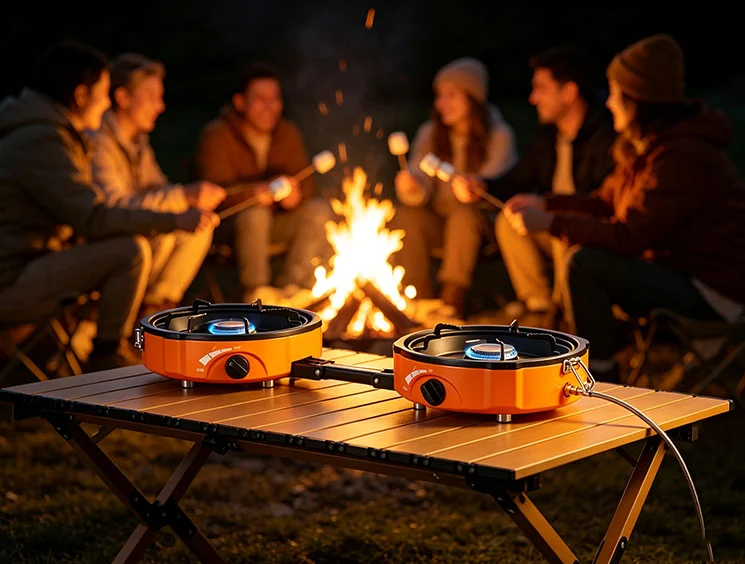
Understanding Portable Dual Burner Stoves: Key Features and Benefits
Fuel Source Options and Their Applications
Gas, electricity or induction heating technologies are used in portable dual burner stoves. Each type of heating has its own benefits for various business uses. The B2B market is dominated by gas-powered units, especially propane models, which have a high BTU output and can be used in a variety of ways. A normal industrial unit gives off about 10,000 BTU per burner head, which is enough heat for fast cooking cycles that are necessary in catering businesses with a lot of customers. Electric types are better for indoor settings where ventilation systems limit the use of gas, while induction systems allow for precise temperature control in certain cooking situations. Understanding fuel compatibility requirements, like the difference between European high-altitude gas tanks and US-standard propane hookups, helps you avoid making expensive mistakes when buying things and makes sure that they work well with your current infrastructure.
Portability and Durability Considerations
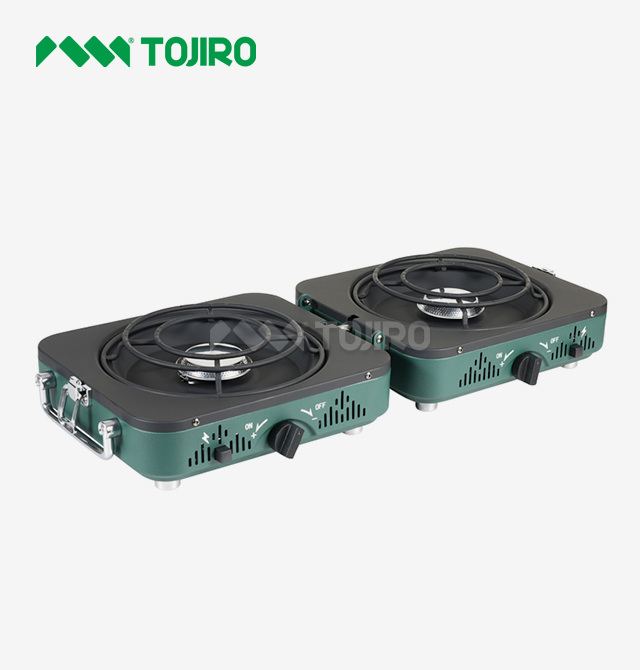
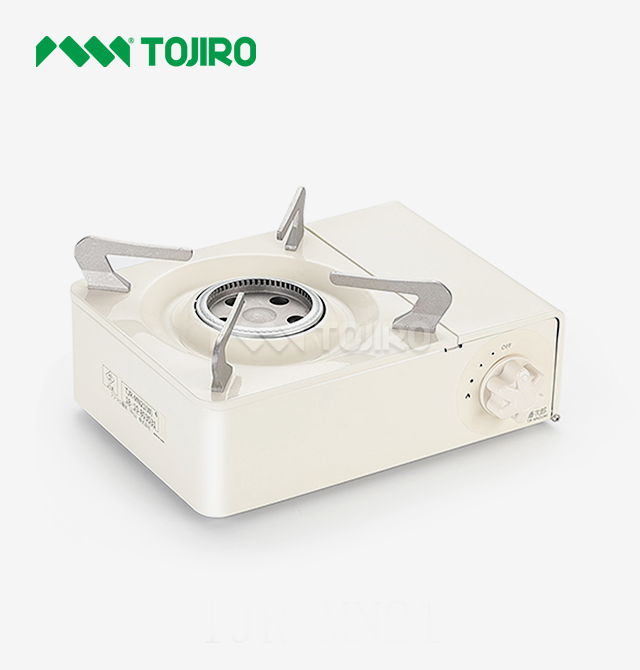
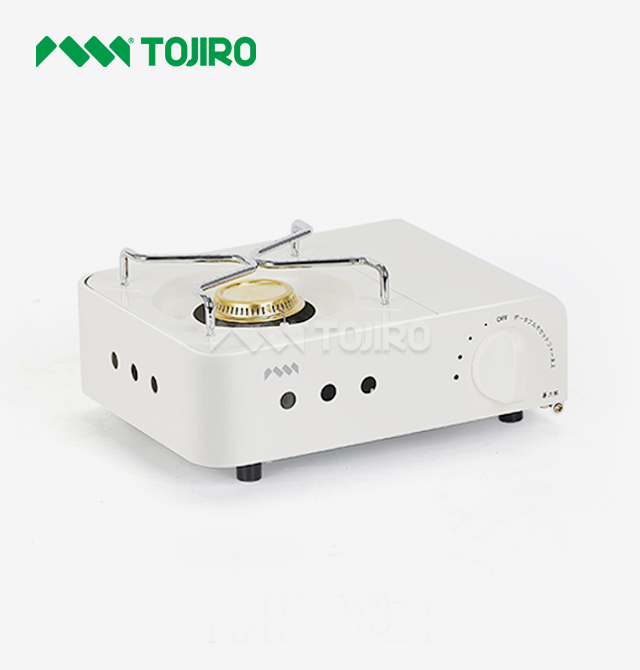
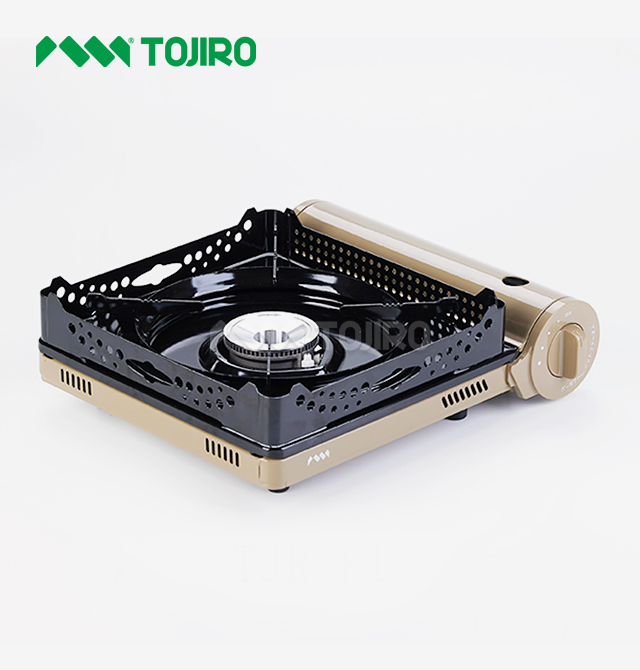
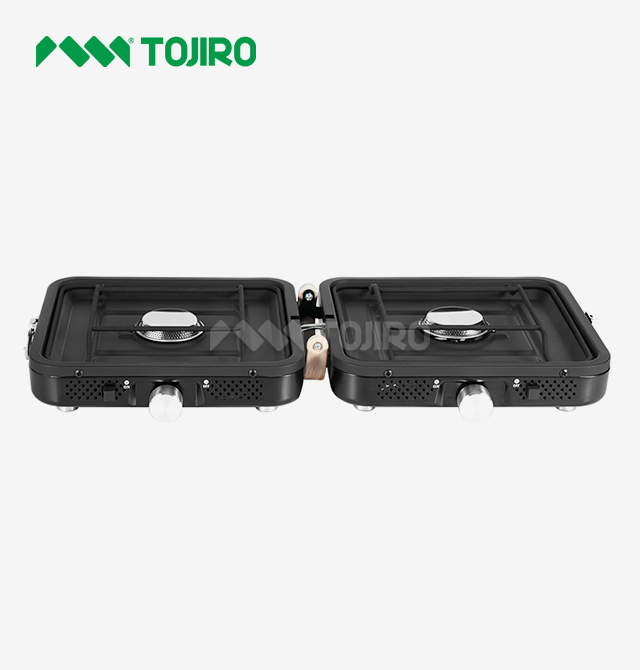
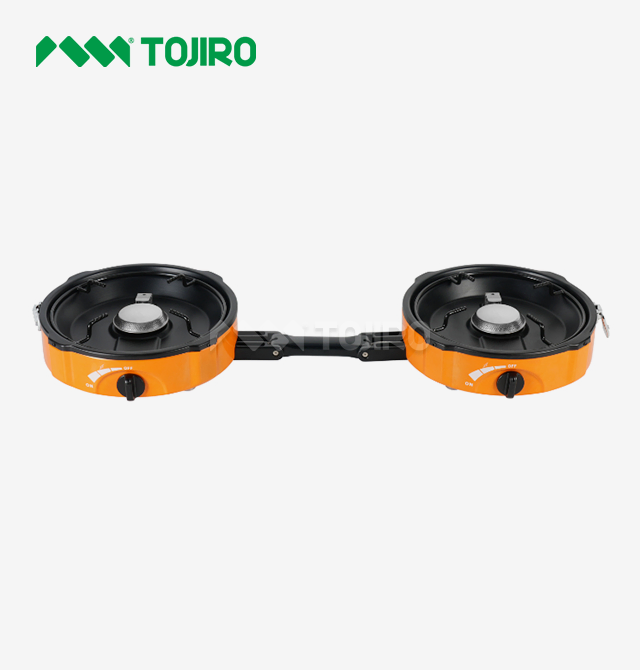
One thing that sets good portable dual burner units apart is how well they balance being mobile and being strong. Professional models usually weigh between 3.4 kg and 4.3 kg, which keeps them portable without sacrificing durability. The materials used in construction have a big effect on how long something lasts in tough business settings. Cold-rolled steel furnace bodies with a spray coating protect against corrosion, and burner heads made of stainless steel don't break down when heated and cooled many times. Black furnace frames that have been painted with high-temperature paint look good even after years of use. When you combine copper valve bodies with braided tubing, you get reliable fuel regulation even when the pressure changes. These material standards directly relate to fewer repair visits and longer service intervals, which are important factors for rental companies and hotel businesses that have to keep track of a lot of equipment.
Energy Efficiency and Safety Features
Commercial portable dual burner systems are made with engineering features that make them safer to use and use less fuel. Regardless of changes in the fuel supply or the temperature outside, pressure-regulating valves keep the light output stable. This consistency keeps food from being undercooked when it's being catered and keeps gas waste to a minimum when cooking for a long time. Integrated ignition systems, whether they are piezoelectric or electronic, get rid of safety risks related to ignition and make work more efficient. Precision temperature control lets operators keep specific heat levels on both burners at the same time, which makes it possible to prepare complex meals in a way that is similar to using fixed professional cooking equipment. These features directly lead to lower running costs, especially for companies that make a lot of meals every day or that work in remote areas where getting fuel is hard to do.
Where to Buy Portable Dual Burner Stoves: Trusted Suppliers and Brands
Evaluating Established Brands Versus Specialized Manufacturers
There are two types of companies that sell portable dual burner equipment: well-known outdoor leisure names and specialised commercial equipment makers. Consumer retail outlets have helped companies like Coleman and Camp Chef build their names by selling well-known goods through large dealer networks. Their strength is that replacement parts are easy to find and that they have a well-established guarantee service system. Specialised manufacturers, like TOJIRO, are very good at commercial-grade building and can make things to fit your needs. TOJIRO has had an ISO9001:2015-certified 10,000-square-meter factory since 2013 that focuses on meeting the needs of businesses that buy from other businesses. These companies often offer ODM/OEM services that consumer-focused brands don't offer. This lets stores and white-label partners make their own product lines. Which is better: brand recognition or the freedom to make changes? That depends on whether your business plan values quick market acceptance or unique product positioning.
Online Marketplaces Versus Direct Manufacturer Procurement
B2B buyers have to decide whether to use the marketplace for ease or work directly with manufacturers. Online stores like Amazon Business and Walmart Marketplace let you sell goods right away, make it easier to pay, and combine shipping. These methods work well for smaller purchases where the number of units ordered stays below 100 and there aren't many customisation needs. When you buy a lot of things, it's better to have direct ties with manufacturers. When you place a minimum order quantity, which is usually 1,000 units for custom setups, you can access price structures that you can't get through other channels. Direct engagement also lets you change specifications, make changes to the packaging, and coordinate delivery times that work with inventory management systems. TOJIRO's 45-day production cycle shows how to plan for direct buying, which requires accurate demand forecasting but saves money in ways that have a big effect on retailers' and wholesalers' gross margin calculations during seasonal inventory changes.
Certification Compliance and Supplier Credibility
Checking the credentials of suppliers guards against bad equipment and fails to follow the rules. Good manufacturers show proof that their products meet regional safety standards. For example, UL certification for the US market, CE marking for Europe, or AS/NZS compliance for the Australia-Pacific region. Besides following the rules, warranty terms show that the manufacturer trusts the product to last. Standard one-year warranties cover problems with the way the product was made, but options for longer warranties show that the quality control process is better. When judging a supplier's trustworthiness, you should look at things like their ability to check facilities, the documentation of their quality management system, and references from other B2B customers. Companies that are open and honest about their production capacity, where they get their materials, and how they test for quality show that they are operationally mature, which is important for building trusting long-term supply partnerships. This extra work is especially important for OEM partners whose brand reputation depends on how consistently their suppliers make their products.
Criteria for Choosing the Best Portable Dual Burner Stove for Your Business
Durability Requirements Across Different Business Applications
Rental and outdoor adventure firms need equipment withstand repeated setup and transport. Packaging engineering matters as much as product design—units surviving 1-meter drops from eight directions ensure operational arrival. Corporate event planners prioritize aesthetics requiring durable finishes. Government buyers value standardization and interchangeable parts for dispersed servicing. Caterers balance durability with weight for daily venue moves. Match durability to actual use cases to avoid costly over-engineering or premature failures from under-specification.
Fuel Efficiency and Total Cost of Ownership
Initial price is just one cost component. Fuel economy directly impacts operating expenses—an optimized 2.8kW dual burner cuts propane use 15–20% versus inefficient designs, delivering significant lifetime savings. Modular systems with standard parts minimize downtime and repair costs. Warranty terms affect replacement budgeting—comprehensive coverage including return shipping provides better cost certainty. Evaluate these variables over the equipment's typical 3–5-year commercial lifespan to reveal true cost differences hidden by focusing solely on acquisition prices.
Customization Capabilities for Brand Differentiation
Retailers increasingly demand customization options beyond fixed-specification suppliers. ODM relationships enable private-label development with brand-specific designs, color schemes, and tailored packaging. OEM agreements allow logo additions and feature modifications for market segments. TOJIRO offers cosmetic and functional changes to meet regional regulations and fuel standards. Custom configurations typically require 1,000-unit MOQs but provide competitive edges through unique offerings—particularly valuable for specialty outdoor stores and hospitality providers requiring design-coordinated equipment.
How to Procure Portable Dual Burner Stoves Efficiently: Best Practices
Defining Technical Requirements and Preparing Comprehensive RFQs
A good procurement process starts with clear recording of what is needed, which removes any confusion during the review of suppliers. The technical specs should list the minimum BTU output per burner, the heaviest and smallest sizes that can be used, the compatibility of the fuel system, and the materials that must be used. Operational factors, such as the type of ignition system, valve specs, and pan matching ranges, keep people from buying the wrong things. Clearly stating what kind of packaging is needed is important because retail-ready packaging is very different from bulk industrial packaging, which affects both the cost per unit and the efficiency of warehouse handling. Certification needs to be made clear from the start, since checking for compliance after the fact causes delays and extra costs. The request for quotation should include expected yearly amounts, payment terms, guarantee needs, and a delivery schedule. Complete RFQs allow suppliers to give accurate answers, which makes it easier to compare products objectively and shortens the time it takes to negotiate. This investment in preparation cuts down on the time it takes to buy things and builds professional relationships with suppliers based on clear communication.
Sample Evaluation and Performance Verification
Before agreeing to large orders, testing a physical sample guards against misrepresentation of specifications and quality issues. For example, outdoor wind exposure for companies that sell camping gear, ongoing multi-hour operation for catering purposes, or multiple setup processes for evaluating rental inventory are all examples of real-life working conditions that should be used for testing samples. Performance proof includes measuring the output of the burner using BTU testing tools, making sure that the ignition system works reliably over a number of rounds, and checking the quality of the material by looking at it directly. Objective performance benchmarking is done by testing new products against existing equipment or products from competitors. Sample evaluation periods should be long enough to find failures that cause infant mortality that happen during the first few hours of use. Recording how well samples worked sets a standard for production deliveries and gives options for what to do if delivered amounts don't match approved samples. This verification step adds time to the buying cycle, but it keeps expensive large-scale deployments of low-quality tools that hurt brand image and relationships with customers.
Building Strategic Manufacturer Relationships
When you use transactional procurement methods, you give up the long-term benefits that come with strategic supplier partnerships. Consistent order numbers and on-time payments put buyers in a position to get special care when capacity is limited and early access to new products. Clear communication about predicting demand helps makers make the best use of their production schedules, which could cut wait times below standard cycles. When quality problems happen, collaborative relationships make it easier to solve them, since trusted partners will prioritise corrective action over defensive positioning. Strategic accounts often get specialised support contacts, customised reports, and advice services that help with problems in the business that go beyond just getting products. TOJIRO's strategy focuses on building partnerships by communicating quickly, negotiating flexible MOQs with long-term customers, and providing proactive technical support. Over time, these relationship perks add up, giving sellers a competitive edge that they wouldn't have if they treated suppliers like any other commodity source.
Portable Dual Burner Stove Maintenance and Safety Tips for Industrial Use
Preventive Maintenance Protocols for Extended Equipment Lifespan
Systematic care programs make portable dual burners last a lot longer while keeping their performance level. Cleaning regularly keeps grease from building up, which makes burners less effective and increases the risk of fire. Every 50 hours of operation, the burner head is checked for carbon buildup that needs to be removed by wire brushing or chemical cleaning. Using manufacturer-recommended products to lubricate the valve body keeps it running smoothly and stops gas from leaking from stuck parts. Before something important happens, the ignition system is tested to make sure it works reliably. If necessary, the electrode gap is adjusted and the battery is replaced. When the fuel line is inspected, wear patterns are found that show which hoses need to be replaced before they break during operation. Having spare parts on hand, like replacement burner heads, valves and ignition parts, cuts down on downtime when repairs need to be made. Recording repair activities makes service history records that help with warranty claims and help decide when to replace things. These rules are especially important for rental businesses and institutions that manage big fleets of equipment because they keep capital expenditures from happening too soon.
Safety Protocols for Commercial Environments
When comparing commercial settings to recreational settings, operational safety requirements go up. Fuel handling procedures must include limits on storage temperatures, steps for finding leaks, and easy access to an emergency shutoff. Ventilation needs are very different for events that happen outside and business kitchens that work inside. Carbon monoxide tracking is necessary in enclosed areas. Operator training classes should teach the right way to light, test for leaks with soapy water, and know what to do in an emergency. Equipment placement guidelines make sure that flammable materials are kept away and that the equipment is mounted securely so that it doesn't fall over. Class B extinguishers, which are designed to put out gas fires, must be easy to get to anywhere portable dual burner units are used. Regular safety checks make sure that protocols are being followed and find possible dangers before they happen. These methodical methods meet the needs of regulators while keeping businesses safe from liability and downtime caused by mistakes that could have been avoided.
Optimizing Operational Efficiency
Best practices do more than just follow basic safety rules. They also make cooking more efficient and lower operational costs. Matching the burner output to the size of the pot or pan keeps heat from being wasted—flames that are too big heat the air around the pot or pan instead of the food inside them, which wastes 25–30% of the fuel. Putting up simple barriers to block the wind outside greatly increases the efficiency of warmth and cuts down on cooking times. Pre-heating period optimisation finds the best settings for each menu item by balancing the amount of fuel used with the time saved during cooking. Different operating situations can be met by using the two burners in different ways. For example, they can be used simultaneously for quick preparation or sequentially for longer cooking. Temperature control keeps fuel from going to waste when there is too much heat, and it also makes sures food is safe by cooking it at the right temperature. Even though these operational changes may not seem important on their own, they add up to big cost savings and higher productivity in high-volume business settings.
Conclusion
Finding portable dual burner stoves for business-to-business uses takes a thorough analysis of technical details, provider abilities, and overall costs that go beyond the initial price. Quality equipment with strong construction, reliable ignition systems, and fuel-efficient use has operational benefits that make it worth the higher price compared to alternatives that aren't up to par. When choosing a supplier, you have to weigh the benefits of brand recognition, customisation, and direct maker relationships. Each method has its own pros and cons that are best for different types of businesses. Completely defining needs, checking samples, and building strategic relationships can make procurement more efficient by turning one-time purchases into partnerships where everyone works together. Systematic maintenance plans and following safety rules are both important for operational success because they protect both machine investments and business operations. When B2B buyers follow these guidelines, they get competitive advantages through reliable equipment performance, lowered operational costs, and unique product offerings that meet the needs of specific market segments.
FAQ
1. Can portable dual burner stoves be safely used indoors for commercial kitchen applications?
For indoor use, you need air devices that get rid of carbon monoxide and bring in oxygen. Local fire codes say how far away flammable materials must be from commercial kitchens and what kind of exhaust hoods must be used. Electric or induction portable dual burner types get rid of the waste products of burning, which makes them better for enclosed areas that don't have industrial airflow.
2. What fuel type offers the best energy efficiency for high-volume commercial use?
Propane gas is the most cost-effective choice for outdoor dining and events because it has a high energy density and quickly produces heat. Induction systems work best in controlled indoor settings where precise temperature control supports the higher costs of the equipment. Along with pure efficiency metrics, a total cost analysis should look at how much it costs to get fuel, store it, and buy new equipment.
3. How can B2B buyers verify product authenticity when sourcing from online vendors?
Ask for proof of approval, such as registrations for manufacturing facilities and quality management system badges. Instead of depending only on what the seller says, check the warranty terms directly with the makers. Before committing to a large order, you can order samples to make sure that the product's specs match the marketing descriptions. Well-known brands like TOJIRO offer direct verification channels through official contact information, which stops people from buying fake equipment.
Partner with TOJIRO: Your Trusted Portable Dual Burner Manufacturer
TOJIRO makes portable dual burners that are commercial-grade and designed to work well in tough B2B situations in the retail, hospitality, rental, and institutional sectors. Our factory, which is ISO9001:2015 certified, uses both traditional Japanese precision craftsmanship and modern production technology to make equipment that can stand up to heavy commercial use and keep working well. We offer full ODM/OEM customisation options with a variable minimum order size of 1,000 units.
This lets brand partners create unique product lines that meet their market placement needs. Each unit is made of cold-rolled steel, has burner heads made of stainless steel that produce 10,000 BTU, and has pressure-regulated copper valve bodies that make sure it works well. Our normal 45-day production cycle and one-year guarantee show that we care about the quality of our products and the reliability of our supply chain. Tojiro's experienced team is available to help you with all aspects of the procurement process, whether you need to buy in bulk for retail distribution, form a white-label manufacturing partnership, or make changes to the specifications for an institutional contract. You can email our business development team at [email protected] to talk about your portable dual burner provider needs and get detailed quotes that are specific to your business.
References
1. National Fire Protection Association. (2021). "NFPA 58: Liquefied Petroleum Gas Code - Commercial Appliance Standards." Quincy: NFPA Publications.
2. American Society for Testing and Materials. (2020). "ASTM F2714-08: Standard Specification for Portable Camping Stoves." West Conshohocken: ASTM International.
3. International Organization for Standardization. (2019). "ISO 9001:2015 Quality Management Systems - Requirements for Manufacturing Industries." Geneva: ISO Central Secretariat.
4. Outdoor Industry Association. (2022). "Commercial Outdoor Equipment Procurement Trends and Market Analysis Report." Boulder: OIA Research Division.
5. U.S. Department of Energy. (2021). "Energy Efficiency Standards for Portable Cooking Appliances: Technical Support Document." Washington: DOE Office of Energy Efficiency.
6. Compressed Gas Association. (2020). "CGA P-22: Safe Handling of Liquefied Petroleum Gases in Commercial Applications." Chantilly: CGA Standards Publications.

USER EVALUATE
Here is the customer's evaluation of us