


What Is an Outdoor Kitchen 2 Burner Stove? Buyer Guide
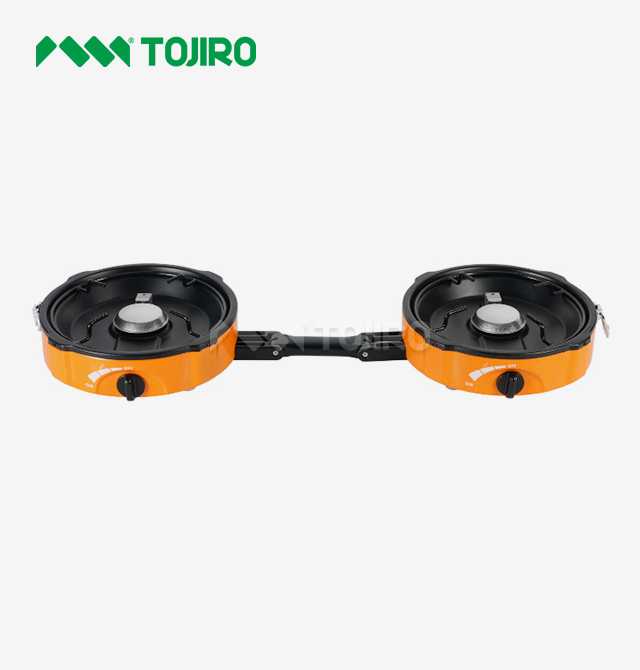
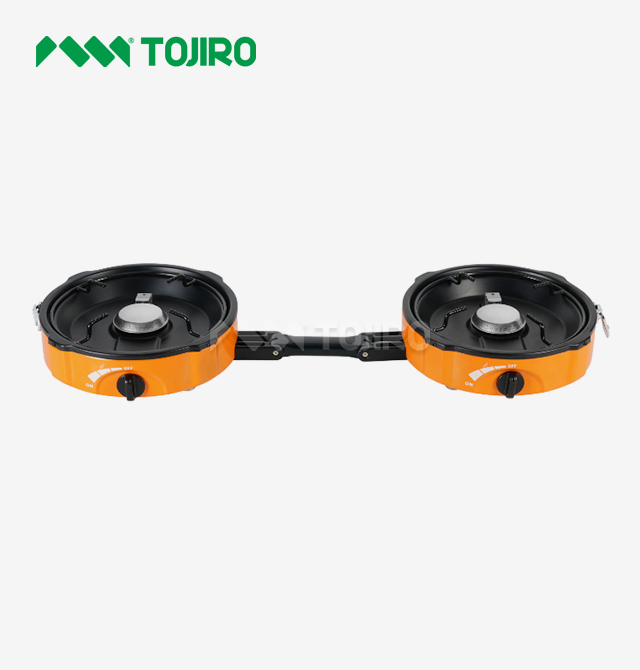
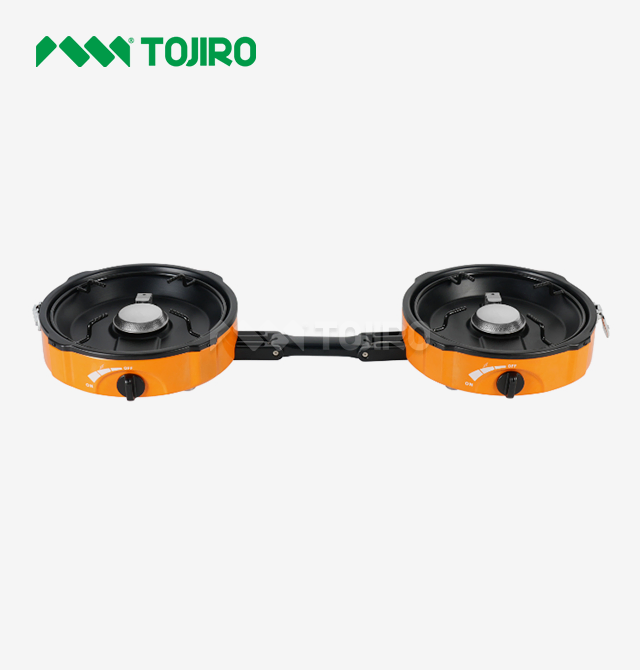
An outdoor kitchen 2-burner stove is a specialized dual-burner cooking appliance engineered specifically for exterior culinary environments, combining portability with professional-grade performance. These systems typically feature compact folding designs, weather-resistant materials such as powder-coated cold-rolled steel, and dual heating elements delivering 8,000-20,000 BTUs per burner. Designed for commercial integrators, hospitality operations, and glamping facilities, these stoves accommodate simultaneous multi-dish preparation while maintaining space efficiency. Whether you're sourcing equipment for outdoor catering, integrating components into modular kitchen systems, or expanding your product line through OEM partnerships, understanding the technical specifications and application versatility of dual-burner systems proves essential for procurement success.
Understanding Outdoor Kitchen 2 Burner Stoves
The development of outdoor cooking equipment has changed how companies do food preparation outside. Modern dual-burner systems are a big step up from traditional single-burner camp stoves. They can do things that business indoor equipment can do, but they're still tough and portable.
Core Design and Configuration
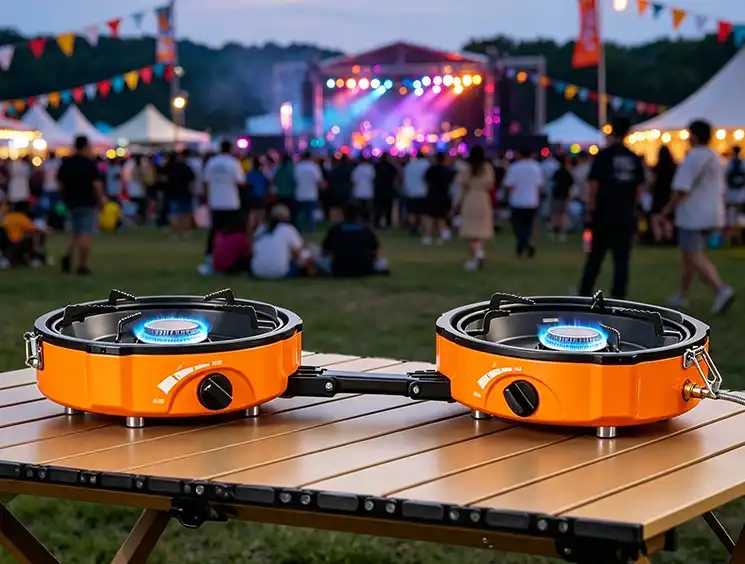
Modern stoves with two burners use advanced tech to combine power output with a small size. The standard setup has two separate burners that are far enough apart to accommodate standard cookware without causing heat interference. Quality units are made from cold-rolled steel and have a special powder coating that keeps them from rusting when they are exposed to water or extreme temperatures. Compared to basic aluminum models, this choice of material lasts a lot longer while still being light enough to transport.
Different models have very different burner technologies. Infrared burners spread heat evenly, which is great for simmering and slow cooking, while open-flame burners let heat touch the food directly, which is great for searing and quickly boiling. The fact that both types of burners are in one box gives it a lot of flexibility for making complicated meals.
Material Quality and Construction Standards
Professional-grade outdoor cooking gear needs to be made of materials that can stand up to heavy use. Stainless steel stove heads don't bend when they get hot, and they're also easier to maintain. Valve systems with brass parts make sure that the flame is precisely controlled and that they will last for a long time. The body of the furnace is usually made of cold-rolled steel that has been treated with powder coating instead of paint. This gives the steel better bonding and resistance to chipping.
Putting water pan systems under the burners collects grease and stops flare-ups, which improves safety and makes cleanup easier. This design thought is especially useful in business settings where equipment needs to be switched between services quickly.
Fuel Compatibility and Efficiency
Propane is still the most popular fuel for portable outdoor cooking systems because it is easy to find and works well at all temperatures. Standard models in Europe can fit high-altitude gas tanks, while standard models in the US can connect to standard propane tanks. This dual compatibility factor is very important for companies that do business abroad or serve customers from a wide range of locations.
How efficiently gas is used has a direct effect on operational costs in business settings. Modern pressure-regulating valves keep the output constant even when the cylinder pressure changes. This makes sure that fuel use is predictable and that performance doesn't drop as tanks get empty.
How to Choose the Right Outdoor Kitchen 2 Burner Stove – A Decision Support Approach
To choose the right equipment, you need to carefully compare the technical specifications to the operational needs. When people make decisions about what to buy without doing a lot of research first, they often end up with equipment that doesn't work well enough or too much, which wastes money and time.
Power Output and BTU Requirements
The cooking speed and temperature range of an outdoor kitchen 2-burner stove are based on the heat output, which is recorded in BTUs. With 8,000 BTUs of power each, each burner can handle most professional outdoor cooking jobs, from quickly boiling water to controlled sautéing. With a total output of 16,000 BTUs, the system can cook more than one dish at the same time without affecting the performance of either burner.
Higher BTU ratings don't always mean that the equipment is better. Too much power can make it hard to control the temperature precisely and can wastefully use more fuel. Matching the BTU requirements to the real cooking needs improves both performance and prices.
Portability and Storage Considerations
The dimensions of folding have a big effect on how they are transported and stored. When collapsed, units that measure about 245 x 210 x 59 mm can easily fit in standard storage spaces and the cargo areas of vehicles. The deployed measurements of about 268 x 210 x 117 mm give you enough cooking room while keeping a small footprint that's good for outdoor places with limited space.
When thinking about weight, you have to balance the needs for sturdiness and flexibility. Commercial-grade construction always adds weight compared to consumer camping gear, but this extra weight helps keep things stable while they're in use and makes them last longer in tough circumstances.
Safety Features and Regulatory Compliance
Pressure-regulating valves prevent harmful pressure variations due to temperature or altitude. Operations in rocky locations or places with high temperature fluctuations need this safety feature.
Safety and convenience are affected by ignition systems. Instead of lighting by hand, one-touch piezoelectric ignition prevents accidents by preventing contact with an open flame during commencement. Even in adverse weather, a reliable ignition prevents annoying waits during essential service periods.
Target markets have distinct certification demands. CE certification is required for European distribution. US businesses may require various compliance paperwork. Checking credentials before purchasing prevents costly legal issues when entering a new market.
Material Durability and Maintenance Requirements
The quality of the construction directly affects how long something works and how often it needs upkeep. Paint finishes don't hold up well outside as long as powder-coated surfaces do. They keep their look and structural stability for years to come. Parts that can be taken off, like water pans, make regular cleaning easier and require less work between services.
The ability to drop-test something shows how strong the structure is. When equipment can withstand one-meter drops from eight different angles, it means it was built very well and is suitable for harsh commercial settings where setup and takedown procedures sometimes involve rough handling.
Installation, Operation & Safety Guidelines for B2B Users
The best way to get equipment to work and keep it safe is to follow the right installation and operation steps. Standardized procedures are needed for commercial operations to make sure that results are the same for all staff members and service sites.
Initial Setup and Fuel Connection
Stable, level positioning prevents spills and uniformly distributes heat over cooking surfaces. Uneven positioning may cause pans to pool liquids on one side, causing deadly spills. Spending 30 seconds checking the level setting prevents many service issues.
Fuel connection seals must be examined. Cross-threading or undertightening connections may generate leaks that endanger consumers and staff. Before each connection, O-rings and gaskets may be visually inspected for wear and changed.
Leak testing using soap solution is simple and effective. Applying the solution to all connecting points and monitoring for bubbles verifies the seal before starting. This quick safety check prevents problems.
Operational Best Practices
Following the manufacturer's instructions for the ignition sequence stops incomplete combustion and the buildup of dangerous gases. Opening the fuel valves all the way before trying to light the spark makes sure that there is enough gas flow for a good spark. Opening only part of the valve during lighting can make it hard to get a flame going and could be dangerous.
To change the flame, you need to know how the position of the valve affects the amount of heat it puts out. Blue flames mean that the fuel is completely burned and working at its best, while yellow flames mean that the oxygen mixture isn't right and the valve needs to be adjusted. Teaching staff to recognize the right flame characteristics keeps cooking results consistent and keeps carbon monoxide from building up in service areas that are closed off from the outside world.
Maintenance and Longevity
Cleaning tools on a regular basis keeps them working well and extends their life. Taking out the water pan after each use and wiping off any residue that has built up stops the buildup that stops heat from moving and poses a fire risk. This easy maintenance job only takes minutes but has a huge effect on the long-term state of the equipment.
Periodically check the burner ports for blocks that stop gas flow and make flame patterns that aren't even. Over time, small pieces of trash or food residue can build up in ports, making them less effective. A monthly checkup with compressed air cleaning keeps the burner working at its best.
Storage procedures keep outdoor kitchen 2-burner stove equipment safe when not in use or between events. Corrosion from leftover grease and wetness can be avoided by cleaning all parts well before putting them away. Keeping parts in climate-controlled spaces as much as possible can make them last longer by stopping rust and seal wear.
Energy Efficiency and Cost Considerations – Optimizing Your Investment
When you look at the numbers beyond the initial purchase price, you can see the total costs of ownership and when you'll get your money back. Instead of just looking at the cost of acquisition, strategic procurement decisions take into account operational costs over the life of the equipment.
Fuel Efficiency and Consumption Patterns
How much propane is used depends on how the burner is set and how long it is used. To make correct running budgets, businesses need to figure out how much fuel costs per service hour. A two-burner system with both elements set to modest settings usually uses propane at a rate that lets it run continuously for several hours on a normal cylinder.
Pressure regulation technology keeps the same level of efficiency no matter how full the tank is. When the pressure in the cylinder drops, older systems that don't have regulation lose performance because they need higher valve settings to keep the same amount of heat output. These inefficiencies are gone with modern regulated systems, which keep fuel use constant until the tank runs out.
Investment Analysis for B2B Buyers
Initial equipment cost is simply one factor in assessing the investment. Even though it costs more, higher-quality construction is a worthwhile investment since durability determines how frequently it has to be updated. Budget alternatives that must be replaced after two seasons are of less value than five-season equipment.
Home maintenance costs mount up over time. Equipment with removable parts and accessible service locations needs less maintenance than sealed devices. This planning idea affects long-term system performance.
Initial ownership risk is mitigated by warranties. Complete one-year guarantees cover manufacturing defects and premature component failure. Companies that rent or acquire a lot of equipment for many locations benefit from this service.
Volume Procurement Strategies
The 1,000-unit minimum order quantity is aimed at business integrators and distributors, not individual users. This threshold lets OEMs make changes to things like panel designs, color options, and the placement of brand logos. Companies that are making their own outdoor kitchen systems can benefit from adding dual-burner parts that are customized and have their brand on them.
For holiday businesses, planning ahead with lead times is important. Standard production processes of 45 days mean that equipment needs to be ordered ahead of time to make sure it is available before peak demand times. By working with manufacturers who can meet these deadlines, you can avoid losing money because of stock shortages during important service windows.
Innovative Cooking Ideas & Enhancements for Outdoor Kitchen 2 Burner Stoves
Modern dual-burner systems can do more than just basic cooking. They can also be used in creative ways that set service offerings apart and make the customer experience better. Businesses can get the most out of their investments by expanding their food options when they know what their tools can do.
Advanced Cooking Techniques
When you combine open flame and infrared burners, you can do more advanced cooking techniques that were only possible in kitchens before. Perfectly searing meats over high-heat open-flame burners while making delicate sauces over low-temperature infrared elements shows that you are a professional with a lot of skills, which is why you should charge more.
Modern valve controls make it possible to precisely control the temperature, which helps techniques that need to keep a certain level of heat. When you're outside, you can keep chocolate at exact melting temperatures or stock at below-boiling temperatures. This means that you can serve more than just grilled foods.
Integration with Modular Kitchen Systems
More and more commercial outdoor kitchen designers are choosing dual-burner stoves as key parts of bigger flexible systems. These systems combine surfaces for cooking, storing food, and getting ready into one cohesive unit that can be used in catering businesses, event venues, and glamping sites. When equipment is set up, its small folding dimensions make it fit into normal cabinets. When it's not in use, it takes up very little room when it's being stored or moved.
Standardized dimensions make it possible for equipment from different manufacturers that work well together to be easily integrated. This modularity gives buyers more choices when they're buying things and lets the system grow in stages as business needs change.
Technology Enhancement Opportunities
New smart technologies allow for better monitoring and control, which makes operations run more smoothly. Real-time temperature monitors make it possible to precisely control the heat without having to keep an eye on it all the time. When safety sensors notice abnormal conditions like flame-out or high temperatures, they automatically turn off the fuel. This keeps dangerous situations from happening when the machine is not being handled.
These technological advances are especially helpful for businesses that have to run multiple cooking areas at the same time or serve a lot of people at events where staff members have to split their attention between many jobs. By making small investments in smart-enabled equipment, businesses can improve safety and cut down on labor needs.
Conclusion
Technical requirements must be balanced against working needs and financial limits when choosing the best outdoor kitchen 2-burner stove. Build quality with powder-coated cold-rolled steel bodies, two burners that consistently produce 8,000 BTU, and many safety features sets the stage for long-lasting performance that you can count on. Businesses that put longevity, fuel efficiency, and following the rules at the top of their list of priorities will do well in the tough outdoor dining market. Being able to customize OEM products lets brands stand out while keeping technical excellence based on traditional Japanese craftsmanship and modern production standards. The 45-day production schedule works with seasonal planning needs, and the full warranty coverage lowers investment risks for decisions about buying in bulk that support business growth strategies.
FAQ
1. What certifications should outdoor kitchen 2-burner stove manufacturers provide?
Reliable manufacturers offer CE certification to meet the needs of the European market and can also look for other certifications that match the needs of other markets. Making sure that manufacturing standards meet international standards means asking for proof that the ISO9001:2015 quality management system is being followed. Making sure the manufacturer has product liability insurance and is ready to give test results for materials and safety features shows that they are trustworthy and lowers the risk of buying from them.
2. How does BTU output affect commercial cooking performance?
With 8,000 BTUs of power per burner, this grill is strong enough for professional outdoor cooking like quick boiling, searing, and high-temperature stir-frying. Lower BTU values make it harder to control the temperature and speed of cooking, while high output makes it harder to control the temperature and uses more fuel. When it comes to business operations, matching BTU specifications to real menu needs improves both performance and operational economy.
3. What minimum order quantities should B2B buyers expect for OEM customization?
When you buy at least 1,000 units, you can get full OEM customization, which includes changing the style of the panels, choosing the colors, adding your brand's name, and making your own packaging. This limit is based on how efficiently tools need to be changed and how much a production run costs. Businesses that want to place smaller orders at first may be able to find a middle ground by agreeing to standard setups with custom packaging or limiting the number of customization choices.
Partner with TOJIRO for Premium Outdoor Kitchen 2 Burner Stove Solutions
For wholesalers and integrators of outdoor kitchen 2-burner stove kitchen equipment looking for trustworthy outdoor kitchen 2-burner stove providers, TOJIRO offers exceptional value. Our factory follows strict ISO9001:2015 quality standards and makes machines that combine the precision of traditional Japanese craftsmanship with the efficiency of modern engineering. We are experts at OEM customization, which helps brands stand out by letting you choose the panel design, color, and logo. Standard production cycles of 45 days allow for seasonal planning needs, and our full one-year warranty protects your investment. Our technical team can help you with your procurement success by responding quickly to English messages. This is true whether you're setting up glamping sites, growing outdoor catering businesses, or creating your own kitchen systems. TOJIRO can be reached at [email protected] to talk about how our dual-burner cooking systems can help you give better products and meet strict business needs.
References
1. Anderson, M. (2022). Commercial Outdoor Cooking Equipment: Selection and Specification Guide. Hospitality Equipment Press.
2. Chen, L., & Roberts, K. (2023). Material Science in Portable Cooking Systems. Journal of Outdoor Equipment Engineering, 15(3), 112-128.
3. European Committee for Standardization. (2021). Safety Standards for Portable Gas Cooking Appliances. Brussels: CEN Publications.
4. Martinez, R. (2023). The Glamping Industry: Equipment Requirements and Market Trends. Outdoor Hospitality Quarterly, 28(2), 45-67.
5. Thompson, J. (2022). Energy Efficiency in Commercial Outdoor Kitchen Design. Sustainable Foodservice Journal, 19(4), 88-103.
6. Williams, S., & Patterson, D. (2023). OEM Strategies for Outdoor Equipment Manufacturers. International Business Review, 34(1), 156-174.

USER EVALUATE
Here is the customer's evaluation of us
_1763607708566.webp)
_1763606628283.webp)