



Basic Knowledge Of Outdoor Propane Tankless Water Heaters When Using And Installing Them
Business-to-business buyers who need reliable and efficient hot water options need to know the basics of outdoor gas tankless water heaters. With an exterior propane tankless water heater, propane is burned to heat water on demand, so there is no need for big holding tanks. These units give you fast hot water and are very good at saving energy. They also have small sizes and can work in tough outdoor conditions. This guide tells procurement managers, rental companies, and hotel operators how to choose the right products for operation, installation, and maintenance in business settings to get the most out of their investments and make sure they work well for a long time.
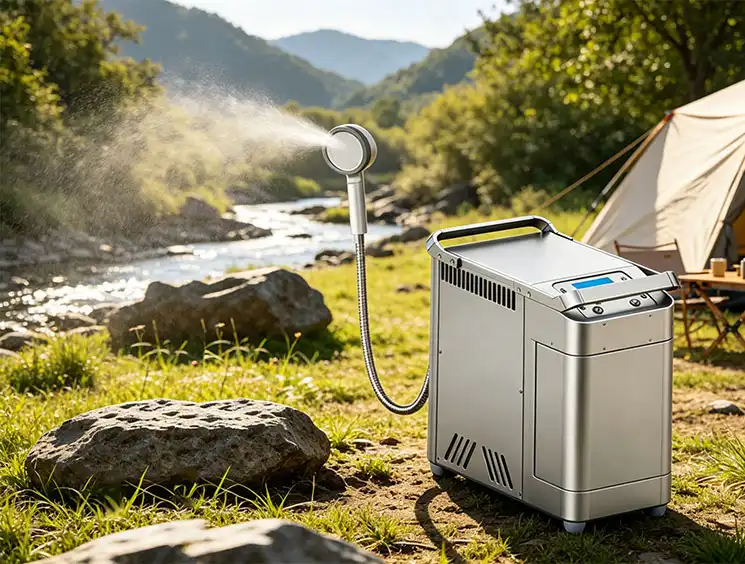
Understanding How Outdoor Propane Tankless Water Heaters Work
Fundamental Operating Principles
When outdoor propane tankless water heaters work, they use a simple but complex process. Cold water runs through the machine when a hot water tap opens. This sets off a flow sensor that turns on the gas burner. The burner heats a heat exchanger, which is usually made of copper or stainless steel. Water flows through the exchanger and quickly gets the right temperature. These on-demand units only use fuel when they are being used, which is a huge improvement over standard tank systems that heat water all the time.
Modern portable water heaters have advanced control systems, such as smartphone apps that let users change the temperature settings from afar. The constant temperature method keeps the output constant even if the flow rate changes. This is especially helpful for businesses that need to know when they will get hot water. With heating power of up to 10,000W and BTU outputs of 34,000, these units can be used by multiple people at the same time and keep the water flowing at a rate of about 5 litres per minute.
Key Benefits for B2B Applications
The convenience of propane tankless systems is not their only advantage. Tankless heaters consume 24–34% less fuel than standard tank heaters, making energy efficiency crucial. Camping rental trucks, glamping sites, and outdoor food and drink vendors save money. The design saves space by not requiring large storage rooms. This frees up valuable space for revenue-generating operations.
Environmental issues are increasingly influencing purchases. Propane burns cleaner and generates fewer emissions per BTU. The on-demand heating technology eliminates tank system standby energy losses. This supports government and commercial purchasers' environmental aspirations. Health-compliant firms might consider not heating water, which reduces germ growth.
Modern outdoor propane tankless water heaters are mobile. Batteries of 10,000mAh can power mobile hot water solutions. These are perfect for emergency relief, temporary outdoor events, and remote campground amenities. The fanless design keeps the machine quiet, preserving the serene atmosphere of camping and outdoor lodges.
Common Operational Challenges and Solutions
Weather causes complications for outside propane tankless water heaters. Freezing temperatures may harm water pipes and other parts in unwinterized units. Good items have freeze prevention devices that drain water or lower the temperature. Procurement teams should evaluate these qualities while purchasing cold-weather tools.
Fuel source homogeneity impacts reliability. Where you reside influences propane availability, and purchasing in quantity may lower expenses. Large rental firms should have many propane suppliers to ensure servicing. Monitoring propane use helps you plan replacement and prevent power outages during peak demand.
Battery drain, debris, and part wear may cause ignition issues. Regularly monitoring starting systems and making battery charging simple reduces downtime. Repair workers can swiftly solve typical issues using tool-free access panels, even without technical expertise. This is crucial for rural operations.
Installation Guide for Exterior Propane Tankless Water Heaters
Site Selection and Code Compliance
When placing exterior propane tankless water heaters, it's important to think about building rules, safety standards, and how well the heater works. Units need to be kept far enough away from flammable materials—usually 12 inches on the sides and 18 inches from the front. Installing on outside walls or independent posts lets air flow freely and keeps equipment from being exposed to direct weather. Commercial setups need to follow NFPA 54, which is the National Fuel Gas Code, and any local changes that are made that are specific to that area.
Standardising placement methods will make training and maintenance easier for purchasing managers who are in charge of installations on multiple sites. Putting units close to where they will be used most cuts down on the time it takes to bring hot water and the amount of heat that is lost through pipes. By protecting sensitive parts from rain, snow, and UV light without blocking airflow, protected alcoves or outdoor shelters make equipment last longer.
Propane Supply and Connection Procedures
Propane connections must be checked for leaks and gas stability. Depending on gas use, outdoor-rated flexible stainless steel gas lines connect to 20-pound cylinders or bulk tanks. Demand-intensive commercial usage frequently benefit from bulk tanks with automated supply monitoring. However, common cylinder connections make field replacements feasible in portable rental units.
Pressure controls must match heater needs. Most tankless systems require 11 inches of water column pressure to work well. Before starting systems, installers should test for leaks using authorised procedures. Operating personnel should be able to access propane safety stop valves, which terminate the propane line in an emergency.
Water and Electrical Integration
Water supply lines require flow pressure to turn unit sensors on continuously. Minimum input pressure is 20–80 PSI, depending on kind. Inner filters prevent silt from harming heat exchangers and flow monitors. Outdoor recreational areas sometimes use well or other dirty water, making this crucial.
Portable battery-powered gadgets simplify electricity demands by eliminating AC power wires. Camping and emergency usage are possible with the 10,000mAh battery's four-hour runtime. Off-grid operators have additional alternatives when recharging using plugs or solar panels.
Freeze Protection Strategies
Cold-weather deployments need freeze avoidance beyond unit-integrated systems. Outdoor water lines should have heat tape and cushioning for the coldest weather. When the system is not in use, low-level drain valves drain all the water. This prevents costly frost damage.
Recycling systems may regularly send warm water through supply pipes in chilly places where companies are operational year-round. While using more fuel, this approach ensures hot water availability and saves infrastructure investments. Corporate and institutional purchasers weigh operational expenses against damage repair costs when making strategic decisions.
Maintenance Tips to Maximise Lifespan and Performance
Routine Service Procedures
Regular maintenance saves money and keeps equipment running. Monthly checks on gas, battery, and water flow. Carbon or rubbish buildup on burner parts may limit efficiency or impede ignite.
Every three months, descaling prevents mineral deposits from decreasing water flow and heat transfer. Hard-water locations require more descaling. Testing water hardness determines frequency. Certified descaling agents remove layers, and vinegar treatments are cheap for upkeep. Facility staff can maintain good tankless heaters without technical skills since their parts are easily available.
Clean filters enhance flow and preserve inner parts. Entry screens keep dirt out of heat exchanges and sensors. Water quality determines filter replacement: weekly in silty regions, monthly in city water. Filter check should be routine to avoid performance decline without notice.
Seasonal Preparation Strategies
Seasonal preparedness enhances outdoor propane tankless water heater lifetime. Drain all water from the system, charge and store the batteries, and cover the units with weatherproof covers that allow ventilation but keep rain out for winter. Writing down winterisation intervals makes people responsible and avoids units from entering freezing weather with water in sensitive parts.
Spring commissioning reverses these steps and thoroughly inspects units before operation. Checking propane lines for cold weather damage. The battery must be fitted and charged to ignite. Running water from exterior taps cleans supply lines before connecting to the heater. The methodical approach anticipates visitor and user difficulties.
Peak season preparation includes spare parts and capacity inspections. Petroleum should be stocked by rental companies before high booking seasons. Quick field repairs using extra ignition modules, flow sensors, and seal kits save expensive downtime. By ordering in bulk, you may get great deals and assure availability in the off-season.
Early Malfunction Detection
Teaching operators to detect early warning signals helps prevent tiny issues from becoming expensive failures. Water levels that fluctuate may indicate flow monitor or burner issues that need expert repair. Strange sounds during operation may indicate a faulty combustion chamber or worn-out electric water pump. When battery performance drops, it needs to be changed before it dies.
Measure temperature and flow periodically and record performance patterns to use for future comparisons. Slowing down heating speed or peak temperature output generally precedes component failure. Monitoring performance-based replacement is cheaper than emergency repairs at peak periods.
Comparative Analysis: Propane vs. Electric Outdoor Tankless Water Heaters
Efficiency and Operational Economics
While both exterior propane tankless water heaters and electric tankless water heaters provide hot water on demand, they work in very different ways. Propane tanks usually have higher flow rates and can handle higher temperatures, which makes them better for industrial uses with a lot of demand. A 34,000 BTU gas heater has about 10kW of heating power, which is enough to heat 5 litres of water per minute to 40°C. Portable electric heaters can't compete with this kind of performance because their circuits can only handle so much power.
Comparing gasoline prices relies on local energy prices. Propane costs $2.50–$4.00 per gallon in the US, whereas electricity costs $0.10–$30 per kWh. When converted to cost per BTU delivered, propane is typically used in locations with high electricity costs or abundant propane. Electric devices convert energy into heat nearly perfectly, whereas propane combustion efficiency ranges from 80% to 95%, depending on quality and maintenance.
Infrastructure demands significantly impact ownership costs. Tankless electric heaters use plenty of power. 150–200 amp panels with independent circuits are needed for whole-house models. Temporary outdoor locations may not have reliable electrical connections; thus, propane-powered batteries are the only choice. Although more expensive, electric models are simpler to utilise in areas with strong power but limited propane availability.
Climate Performance Considerations
Portable water heaters perform poorly in cold weather. At the right exit temperatures, flow rates depend on water inflow temperature. As long as they include freeze protection, outside propane tankless water heaters can heat regardless of the weather. Electric resistance heating operates the same in all temperatures; however, colder regions may have higher heating demands than the electrical system can handle.
The reliability of propane systems even when the electricity goes out makes them ideal for crisis help and emergencies. When other systems fail, battery-powered propane heaters provide hot water. Government purchasers of emergency response equipment or facilities that must operate during natural catastrophes benefit from this independence.
Different obstacles arise in extreme heat. In direct sunlight, control systems might overheat, and plastic components shatter. Desert propane and electric versions must be shaded or sheltered for safety. Electrical components function in a larger temperature range than propane storage temperatures, which affect tank pressures.
Maintenance and Longevity Factors
Propane and electric tankless systems have different maintenance needs. Propane heaters need to have their burners cleaned, combustion chambers inspected, and starting systems serviced on a regular basis, which electric heaters don't have to do. But in hard water, mineral scaling builds up on electric heating elements more quickly, which could mean that they need to be descaled more often. Exterior propane tankless water heaters made to ISO9001:2015 standards have great service lives that often last longer than ten years in business settings with proper care.
The length of the warranty shows how confident the maker is in the product's reliability. Most good propane tankless heaters come with full guarantees that cover parts and labour for one year. When buying a big fleet, extended warranty options should be thought about because they protect procurement budgets from unexpected repair costs. To make accurate total cost of ownership estimates for B2B buying choices, you need to look at guarantee terms along with upkeep needs and expected service life.
Choosing the Right Exterior Propane Tankless Water Heater for Your Business
Evaluating Performance Specifications
Make sure the tankless water heaters you purchase meet the business's demands. The flow rate, calculated by dividing the desired GPM (gallons per minute) by the number of simultaneous users, is the most critical metric. For instance, a four-stall camping shower house would need 8 to 10 litres of water per minute, which would require numerous 5-litre units or higher-output business models. Incoming water temperature and desired output determine the temperature increase. Installations in cold regions require additional heat.
Burning power is measured in BTUs. Homes typically have 140,000–200,000 BTU, whereas enterprises might have over 300,000. Portable 34,000 BTU versions are suitable for single-point applications like glamping showers or RV connections. Corporate purchasers of multi-station systems should consult technical specialists to ensure proper size. Thus, consumers won't be disappointed by small installations, while large ones would waste money and fuel.
Products become more unique with control features. For rental firms that need to check equipment utilisation, connecting a smartphone app to the internet allows you to set the temperature and track consumption remotely. Constant temperature systems maintain output regardless of flow. This prevents the temperature from fluctuating when numerous people use the device, which is inconvenient. Application portability relies on battery capacity and recharge options.
Brand Reputation and Support Infrastructure
Established manufacturers have successful track records and robust support networks. Rinnai was one of the first to employ portable water heaters and has substantial North American service networks. Rheem makes several versions for homes and heavy-duty businesses. Noritz emphasises minimising technology to maximise its use. Bosch follows European technological standards, whereas Bradford White makes durable commercial items.
TOJIRO combines traditional and contemporary Japanese manufacturing. Our ISO9001:2015-certified facility creates over a million pieces annually to fulfil overseas quality requirements. The 45-day manufacturing cycle allows for large quantities and custom layouts. ODM/OEM capabilities enable white-label partners and outlets with private labelling or market-specific features.
Post-purchase support should be examined by procurement professionals. Long downtime is avoided when replacement parts are accessible. Rental firms with busy seasonal plans need fast technical support to address issues. Installation assistance and training services speed up rollout and ensure equipment is properly set up, extending its life.
Procurement Channel Considerations
Exterior propane tankless water heaters can be purchased by businesses in a number of different ways, each with its own benefits. When you deal directly with a maker, you can get the best prices on big orders and talk about customisation. Distributors offer a wide range of products and well-established transportation networks, which makes buying easier for people who manage portfolios of tools from multiple brands. Online markets make prices clearer, but they might make warranty service and technical help harder to get.
To find the total cost of purchase, you have to look at more than just the unit prices. The cost of shipping heavy business equipment has a big effect on budgets, especially for installations that are far away. Buying in bulk can often get you savings and spread the cost of shipping over a bigger order. Cash flow can be aligned with times when rental and hotel businesses can make the most money by negotiating longer payment terms or seasonal billing structures.
For activities that depend on having tools on hand, supplier dependability is very important. Manufacturers who keep a lot of supplies on hand can meet urgent repair needs and quickly grow their fleets. During busy manufacturing times, limited production capacity can cause shipping delays if orders are not made well in advance of installation dates. TOJIRO's production timeline of 45 days lets you plan with confidence, and our yearly capacity makes sure that we can meet your needs even when demand is high.
Conclusion
Exterior propane tankless water heaters are a great deal for businesses that need reliable, efficient hot water in tough settings. Understanding working principles, installation standards, and upkeep processes helps procurement teams get the most out of the equipment and make it last as long as possible. There are some differences between propane and electric systems that show why propane is better for high-output movable uses, like rental companies, outdoor events, and emergency response equipment. To choose the right tools, you need to match the performance requirements to the needs of the operation while also looking at the name of the maker, the support system, and the total cost of ownership. The dependability that businesses need comes from high-quality goods that are made to international standards and come with full warranties and quick expert support.
FAQ
1. Can outdoor propane tankless water heaters function reliably in extremely cold climates?
When placed correctly, freeze protection features built into high-quality exterior propane tankless water heaters allow them to work in temperatures below zero. Winterisation steps, such as removing lines and adding insulation, keep things from breaking when they are exposed to cold for a long time. When the temperature drops below -10°C, battery-powered portable types may not work as well, so they need to be kept inside between uses.
2. What typical installation costs and timelines should facilities expect?
Simple setups for a single movable unit take one to two hours and don't cost much more than the equipment itself. The cost of work for commercial fixed installations with a constant propane supply and multiple connection spots is usually between $800 and $2,250, based on how complicated the job is and how much it costs in your area. Lead times vary—stock units ship right away, while custom configurations are made according to the manufacturer's plan, which takes about 45 days for specific orders.
3. How frequently do outdoor propane tankless water heaters require professional maintenance?
For most business uses, an annual professional check is enough, as long as the building staff takes care of it regularly. Places that get a lot of use, like camps, might benefit from cleaning every six months. Before putting units back into inventory, rental companies should check them over after each use and fix any problems they find. In places with hard water, descaling needs to be done more often to keep things running at their best.
Partner with TOJIRO for Superior Outdoor Propane Water Heating Solutions
TOJIRO makes exterior propane tankless water heaters for outdoor use that are designed to meet the needs of challenging B2B uses. Our manufacturing skills blend the traditional Japanese level of accuracy with cutting-edge production technology to make tools that are better than ISO9001:2015 quality standards. TOJIRO offers customised solutions that meet your specific operational needs, whether you're an exterior propane tankless water heater supplier looking to add more products to your line, a rental company needing long-lasting equipment for difficult deployments, or a hospitality operator looking to improve the guest experience. Our full one-year guarantee, 45-day production cycle, and flexible ODM/OEM options help stores, white-label partners, and institutional buyers who want to build long-term relationships with a trusted company. To talk about your hot water heating needs and get specific quotes that fit your business's needs, email our procurement experts at [email protected].
References
1. Anderson, M.T. (2023). Commercial Tankless Water Heater Systems: Engineering and Application Guide. Industrial Equipment Press.
2. Federal Energy Management Program. (2024). Propane Water Heating for Commercial Facilities: Best Practices and Performance Analysis. U.S. Department of Energy.
3. Martinez, R.L., & Chen, K. (2024). "Comparative Lifecycle Cost Analysis of Tankless Water Heating Technologies in Outdoor Applications." Journal of Commercial Building Systems, 18(3), 234-251.
4. National Fire Protection Association. (2023). NFPA 54: National Fuel Gas Code, 2024 Edition. NFPA Publications.
5. Peterson, J.W. (2023). Outdoor Recreation Facility Operations: Equipment Selection and Maintenance Strategies. Hospitality Management Publishing.
6. Thompson, S.R., & Wallace, D.K. (2024). "Performance Optimization of Propane Tankless Water Heaters in Cold Climate Deployments." International Journal of HVAC Systems, 29(2), 112-128.

USER EVALUATE
Here is the customer's evaluation of us
_1763607672511.webp)
_1763606719875.webp)