


How to Choose the Best Two Burner Portable Stove for Camping
Choosing the right two burner portable stove involves evaluating power output, construction materials, fuel compatibility, and portability features. Look for units with consistent BTU ratings (8000+ per burner), durable cold-rolled steel construction with powder coating, reliable ignition systems, and compact folding designs that withstand transport rigors. Compatible fuel options—propane for U.S. markets or high-altitude canisters for European standards—ensure versatility across regions. Procurement buyers should prioritize suppliers offering ISO-certified manufacturing, customizable packaging tested for drop resistance, predictable lead times around 45 days, and flexible minimum order quantities starting at 1000 units to balance inventory costs with demand cycles.
Understanding Two Burner Portable Stoves: Features and Types
Outdoor cooking gear has changed a lot over the years. Buying managers can better match products to specific market needs if they understand how dual burner camp stoves work. The controlled gas combustion in these portable cooking solutions turns fuel into heat energy that quickly heats up cookware.
Fuel Source Options and Their Implications
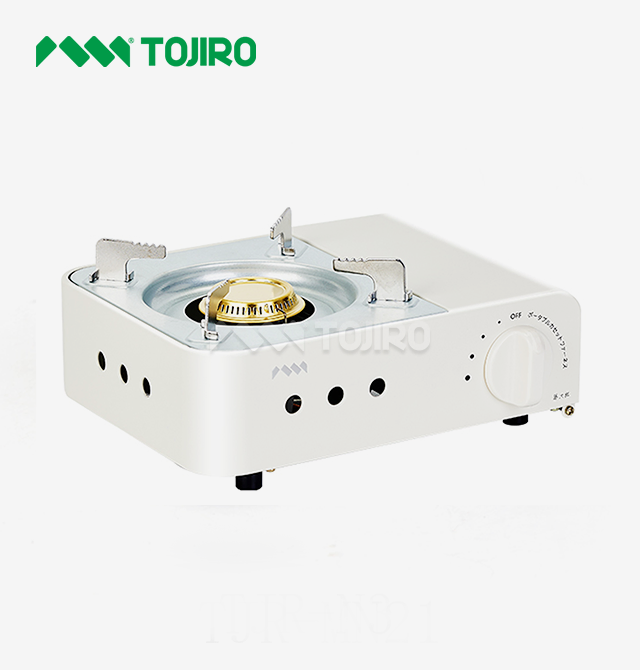
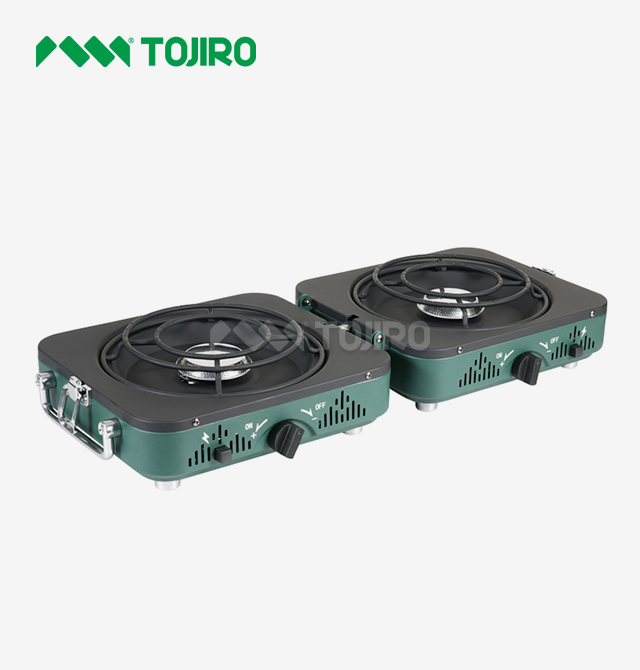
Propane-powered camping stoves are the most popular in North America because canisters are easy to find and work well at all temperatures. Propane has reliable pressure even in cooler climates, so it can be used for camping in the spring and fall when the temperature drops below 50°F. The TOJIRO Shell Stove TJR-BK39 works with both European high-altitude gas canisters and U.S. propane standards, which makes it useful for international distribution networks.
However, performance decreases significantly below 32°F for butane options that are light and easy to connect to canisters. This type of fuel works well in mild climates and during the summer when camping isn't a big deal.
Burner Configuration and Cooking Flexibility
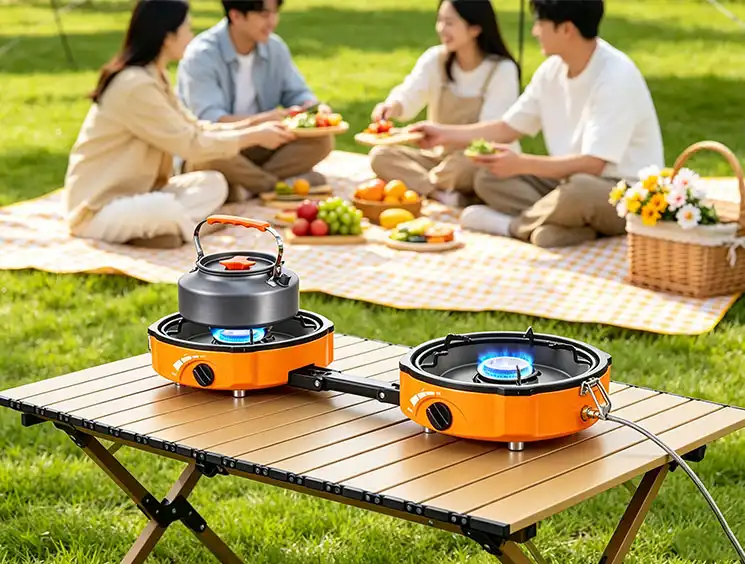
Dual-burner sets can cook two things at the same time, which isn't possible with single-burner sets. When compared to cooking one dish at a time on a single burner, the two burner portable stove design lets users boil water for drinks while making protein dishes, cutting down on meal preparation time by 40–50%. On the TOJIRO type, each stove gives off 2.3kW of power, which is the same as 8000 BTU and is enough for boiling, sautéing, and simmering.
Premium models have both open flame and infrared burner heads, which lets you cook in more ways. Open flame burners are great for searing and wok cooking over high heat, while infrared technology spreads heat evenly for delicate sauces and steady simmering. This method uses two different technologies to meet a variety of cooking needs while camping.
Portability and Storage Considerations
Portable camp stoves are different from stationary outdoor cooking gear because they have small folding mechanisms. The TOJIRO unit is only 245mm by 210mm by 59mm when it is folded up, so it doesn't take up much room in car trunks or warehouse shelves. The powder-coated cold-rolled steel construction keeps the structure from rusting during long periods of storage, so it can be used in all four seasons. Packaging that can withstand eight-degree drops from one meter height makes sure that the product arrives undamaged, which lowers the number of returns and customer complaints for distributors who have to manage complicated supply chains.
Key Decision Criteria for Selecting the Best Two Burner Portable Stove
When purchasing managers look at different camping stoves, they need to consider a number of performance factors that have a direct effect on how satisfied and reliable the stoves are for users. These factors set good products apart from truly great ones that deserve to be sold at a higher price in stores.
Power Output and Thermal Efficiency
BTU numbers show how much heat something can hold. For real outdoor cooking, 8000 BTU per burner is the minimum. Lower outputs have trouble with bigger pots or at high altitudes, where the pressure of the air makes combustion less efficient. Professional-grade units like the TOJIRO model have 2.3kW of power delivered per burner, which makes sure that water boils quickly. Under normal conditions, one liter of water will reach a hard boil in about 4 to 5 minutes.
How much gas is used directly affects operating costs and how often fuel canisters need to be replaced. At 152g/hour per burner, the TOJIRO stove can cook for about 6-7 hours on a standard 450g propane canister when both burners are running at the same time. This means that you can go on longer camping trips without having to refuel often.
Construction Materials and Longevity
When it comes to longevity and heat retention, cold-rolled steel with a premium powder finish beats aluminum options. Accidental hits to steel frames during shipping and setting are less likely to lead to warranty claims. Powder coating makes a smooth, non-porous surface that doesn't let grease build up and is easier to clean. These are important qualities for rental businesses or guided camping services that need to replace equipment often.
Pot matching requirements are important for flexibility. The 10–20 cm range for the bottom diameter fits most camping cookware while keeping the pot stable. Customers who worry about how well cookware fits will be less likely to do so in the future, and a wider range of cooking vessels will be able to be sold.
Safety Features and Regulatory Compliance
Pressure-regulating valves keep the flame output constant even though the pressure in the fuel cylinder changes as the contents run out. This part keeps dangerous flare-ups from happening and keeps cooking temperatures stable during long sessions. Voltage ignition systems get rid of the dangers of lighting things by hand. This is especially helpful when it's windy and hard to get an open flame going.
Getting ISO9001:2015 certification shows that a company uses quality control methods to make sure that differences between batches are kept to a minimum. This is especially important for stores that sell seasonal items. The GB/T38522-2020 safety standard meets the needs of Chinese manufacturers. However, foreign markets need other certifications, which TOJIRO can easily provide through its flexible certification application processes.
Weight and Dimensional Specifications
When unfolded, the 268x210x117mm dimensions make the cooking platforms stable and prevent them from tipping over when heavy pots are on them. The small, folded shape makes it possible to use shipping containers more efficiently, which lowers the cost of freight per unit. Distribution centers like goods that make pallets as dense as possible without sacrificing the integrity of the protected wrapping.
Comparing Top Models and Brands in 2026
In the market for outdoor cooking equipment, there are both well-known names and new companies that are giving competitive value. Figuring out positioning helps buyers find the best sellers for their channel plans.
Established Brand Performance Benchmarks
Coleman is the leader in mass-market retail outlets, with a well-known name and vast distribution networks. Their types with two burners usually have a total output of 20,000 BTU and are made of durable painted steel. They have prices ranging from $45 to $80 at stores, making them easy for casual campers to afford. Because Coleman is sold at a lot of big-box stores, customers have high standards for its features and performance.
Weber uses its skill in grills to make movable stoves that cost a lot because of the strength of its brand. Their models focus on even heat distribution and wind-resistant burner designs, which appeals to cooks who are willing to spend $120-$180 for better performance. Weber's well-established insurance support system gives buyers peace of mind about the product's long-term dependability.
Emerging Value-Oriented Alternatives
To stay competitive, companies like TOJIRO offer better price-to-performance rates while still meeting professional standards. When you combine dual burner head technology, 8000 BTU per burner, and ISO-certified manufacturing, you get features that are on par with high-end brands at wholesale prices that are hard to beat. The 45-day production cycle works with yearly ordering trends so stores can change their stock levels based on the weather and their plans for sales.
Customization options through ODM/OEM agreements let regional stores that want to set their brands apart use private label tactics. Custom package designs that meet specific drop-test requirements and printing in the local language turn plain goods into branded ones without having to spend money on tools or wait longer for delivery.
Single Burner Versus Dual Burner Trade-offs
Single-burner camping stoves are the most portable and cost the least, making them perfect for solo hikers who want to cut down on weight. For groups of two or more people, however, a two burner portable stove configuration is far superior due to the increased cooking efficiency that results from simultaneous food preparation. For family camping, group trips, and base camp operations, the small weight gain (usually 1-2 pounds) is worth it because it cuts down on the time it takes to prepare meals.
Additionally, dual burner systems offer redundancy; if one burner breaks down, cooking can continue without stopping, so meals can still be made. This factor of dependability is very important for guided camping services and hire businesses where broken tools can make customers unhappy.
Procurement Considerations for B2B Buyers
To make strategic choices about where to get camping stoves, you have to look at more than just unit prices. You have to look at the total cost of ownership. Successful sellers look at the skills, transportation, and support services of suppliers that affect how profitable the product is throughout its lifetime.
Pricing Structures and Volume Incentives
Standard starting points for direct manufacturer relationships are minimum order amounts of 1000 units. This balances production efficiency with manageable inventory responsibilities for mid-sized wholesalers. This level lets packaging materials and shipping costs be consolidated, but it's still low enough that regional wholesalers can test out new product categories.
Volume-tiered pricing usually offers 8–12% discounts for orders of 2,500 units or more, and 15–18% discounts for orders of 5,000 units or more. This encourages bigger contracts that support dedicated production runs. Payment terms that are flexible, such as 30–50% deposits with the balance due before shipment, allow for a range of buyer cash flow preferences.
Supply Chain Logistics and Lead Time Management
Standard practices for steel fabrication and powder coating methods call for 45 days between receipt of the order and shipment ready. This schedule works for orders made in the spring season from late December to early January, making sure that they arrive in time for the busiest camping season in March and April. Buyers who are in charge of distribution networks with multiple locations like it when manufacturing schedules are stable and easy to set up so that warehouses can work together and retailers can plan their stock.
When you have stock of SKUs that are in high demand, you don't have to wait as long for deliveries when demand goes up unexpectedly. When manufacturers keep finished goods in stock for popular configurations, they can place emergency restocking orders that keep them from running out during sales or when unexpected weather patterns cause a lot of people to go camping.
Customization and Private Labeling Options
OEMs can do more than just place logos; they can also make major changes to product specifications. Buyers can ask for different burner setups, change the folding mechanisms to fit their storage needs, or change the color schemes to match their brand's standards. Customizing the packaging takes into account language needs, differences in safety labeling requirements, and different channel partners' tastes for how to show the goods in stores.
Private label programs turn commonplace two burner portable stove goods into branded differentiators that drive higher margins and foster customer loyalty. When rivals sell the same goods at different prices, you can't directly compare prices with exclusive designs. This protects margin structures even in price-sensitive markets.
Warranty and After-Sales Support Infrastructure
A one-year warranty shows that the manufacturer is confident in the product's durability and gives customers peace of mind, which makes them less likely to hesitate to buy. Clear warranty terms that say they only cover manufacturing flaws and not damage from misuse or accidents set fair standards and keep the cost of settling disputes to a minimum.
Distributors can quickly answer questions about installation, fix problems with performance, and handle guarantee claims when they have responsive technical support channels. Manufacturers who offer email support at [email protected] with written response time commitments (usually 24 to 48 hours) let distributors keep customers happy without having to train staff in-house for every product category.
Best Practices: Usage, Maintenance, and Safety for Two Burner Portable Stoves
Following the right steps for use and maintenance will make a product last longer and make sure that cooking is safe, which will help people remember the brand. When distributors teach customers about these habits, the number of returns and warranty claims goes down.
Setup and Operating Procedures
Setting up stable, level positions on non-flammable surfaces keeps things from falling over while cooking. Professional compact camp stoves are stable enough for pots with a diameter of up to 20 cm when they are fully stretched, but users should make sure the stove is level before lighting the burners. When it's windy, flame patterns need to stay consistent, and fuel waste needs to be stopped by windshields or natural barriers with a two burner portable stove.
Models like the TOJIRO stove have voltage lighting systems that are turned on by pressing a button while keeping the gas control knobs open. With this one-touch operation, you don't have to mess around with matches or different lighters, which is especially helpful when the weather is bad or there isn't much light. People should wait two to three seconds after the gas valve opens before trying to start the engine so that the right amount of fuel and air can mix.
Cleaning and Maintenance Requirements
The high-temperature oil and water spray tray collects spills and splatters while cooking. This keeps burner parts from getting too much grease, which lowers their performance. Once the trays are cool, they should be wiped down with wet cloths after each use to get rid of any food leftovers before it turns into hard deposits. Deep cleaning powder coatings every three months with mild soap solutions keeps them looking good and stops corrosion in wet storage areas.
When you check the burner head every 20 to 30 uses, you can find clogged ports that cause the flame patterns to be uneven. Small wire brushes remove dirt from gas holes, allowing heat to be distributed evenly again. By checking the fuel connection seals for wear, you can stop dangerous gas leaks that can start fires and waste expensive fuel by evaporation.
Storage Recommendations for Extended Lifespan
Store camping stoves in dry locations and remove fuel tanks to prevent corrosion, seal damage, and fire risks. Their compact 245×210×59mm folded size suits standard storage systems. During off-season storage, operate the burners for 2–3 minutes every three months to keep valves functional and reduce ignition problems after extended inactivity.
Case Application: Large-Scale Outdoor Event Catering
A regional outdoor event company used 20 TOJIRO two-burner stoves for 500-person camping events, reducing meal service time from 90 to 45 minutes. During four months, 19 units required no service, while easy-clean trays reduced cleanup by 30%. Stable 2.3kW-per-burner output improved efficiency despite changing outdoor temperatures.
Conclusion
When looking for the best camping stove, you need to weigh the stove's power output, build quality, fuel compatibility, and flexibility against your budget and the ways you plan to use it. When it comes to group camping, commercial outdoor work, and emergency preparation, where cooking efficiency directly affects user happiness, the two burner portable stove category has many appealing benefits. Professional-grade models with 8000 BTU per burner and long-lasting cold-rolled steel construction meet the high standards of dependability that serious outdoor users expect. Partnering with ISO-certified makers that offer open customization, predictable 45-day wait times, and full warranty support is good for procurement pros. Technical specifications, supplier capabilities, and total cost all work together to help people make smart buying decisions that meet the needs of end users and keep profit margins healthy across all channels of distribution.
FAQ
1.What fuel type works best for cold-weather camping with dual burner stoves?
Propane works much better than butane in cold weather; it keeps the same pressure and vaporization down to 0°F, while butane's performance drops significantly below 32°F. The TOJIRO stove can work with both U.S. propane standards and European high-altitude tanks, so it can be used in a variety of climates and markets. High-altitude gas formulas include propane-butane blends that are designed for lower atmospheric pressure. This makes sure that the gas can be ignited reliably above 8,000 feet, which is where regular fuels have trouble.
2.How does batch consistency affect retail operations?
The ISO9001:2015 manufacturing certification makes sure that production processes are standardized so that there is little difference in performance between runs. Quality that isn't consistent leads to complaints from customers, higher costs for handling returns, and damage to the brand's image. Professional manufacturers use statistical process controls to keep an eye on every production batch, making sure that the burner output, ignition reliability, and coating adhesion are all the same. This gives retailers the confidence they need to make inventory commitments.
3.What customization options support private label strategies?
OEMs can make changes to the burner configuration, the color scheme, the design of the packaging, and the localization of safety labels. Buyers can ask for different folding methods, change the size of the pot support, or change the lighting systems while still getting the same core performance. For custom setups, the minimum order quantity usually starts at 2000 to 3000 units. This is done by weighing the costs of purchasing tools against the benefits of being able to stand out in the market for regional wholesalers.
Partner with a Trusted Two Burner Portable Stove Manufacturer
TOJIRO makes professional-grade cooking gear for camping that combines traditional Japanese craftsmanship with the efficiency of modern industrial production. While offering low wholesale prices that maximize your retail profit opportunities, our two burner portable stove models meet international ISO standards. The steady 45-day production cycle helps with planning seasonal inventory, and our adaptable ODM/OEM skills let private label plans set us apart. Each unit is put through a lot of quality checks, such as a 1-meter drop test from eight different angles. This makes sure that the goods come ready to be displayed in stores right away. With a minimum order size of 1000 units, a guarantee that covers one year, and quick technical support, we help importers and retail chain buyers. Email our procurement team at [email protected] to talk about your specific needs and get quotes that are tailored to your distribution needs. Visit qstojiro.com to see our full catalog of outdoor cooking tools and learn how our production skills can help you offer more camping gear.
References
1. Johnson, M. (2023). Outdoor Cooking Equipment: Performance Standards and Safety Compliance. Wilderness Publishing Group.
2. Chen, L., & Rodriguez, A. (2024). Supply Chain Strategies for Seasonal Outdoor Recreation Products. International Journal of Retail Management, 45(2), 112-128.
3. Outdoor Industry Association. (2024). Camping Equipment Market Analysis: Trends and Forecasts 2024-2026. Boulder, CO: OIA Research Division.
4. Thompson, R. (2023). Portable Gas Appliances: Engineering Design and Manufacturing Processes. Technical Press International.
5. Williams, S., & Park, J. (2024). B2B Procurement Best Practices in Outdoor Recreation Supply Chains. Journal of Strategic Sourcing, 17(3), 201-219.
6. National Fire Protection Association. (2023). Safety Standards for Portable Cooking Appliances: NFPA Guidelines and Compliance Requirements. Quincy, MA: NFPA Publications.

USER EVALUATE
Here is the customer's evaluation of us
_1763619721954.webp)
_1763609661748.webp)