


Buying Guide: How to Buy Mobile Stove Top
To choose the best compact cooking gear, you need to carefully consider how long it will last, how well it works, and how reliable the provider is. A mobile stove top can be used for many different types of business activities, such as renting out and hosting guests, as well as distributing goods in stores and buying things for institutions. This guide looks at important factors that affect buying choices. It helps procurement managers find equipment that meets both practical and financial needs. If you know about the different types of fuel, the quality of the construction, and the rules that must be followed, you can be sure that your investment will work well in tough commercial settings and meet safety rules and environmental goals.
Understanding Mobile Stove Tops: What You Need to Know?
Defining Mobile Cooking Solutions
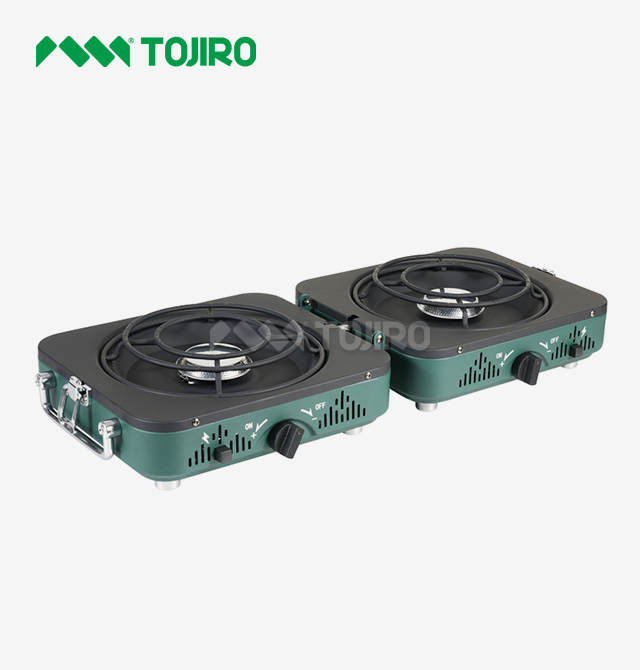
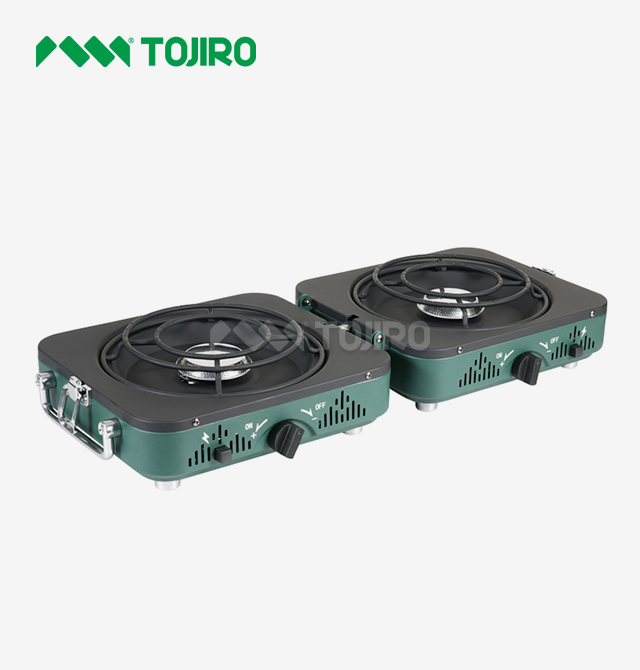
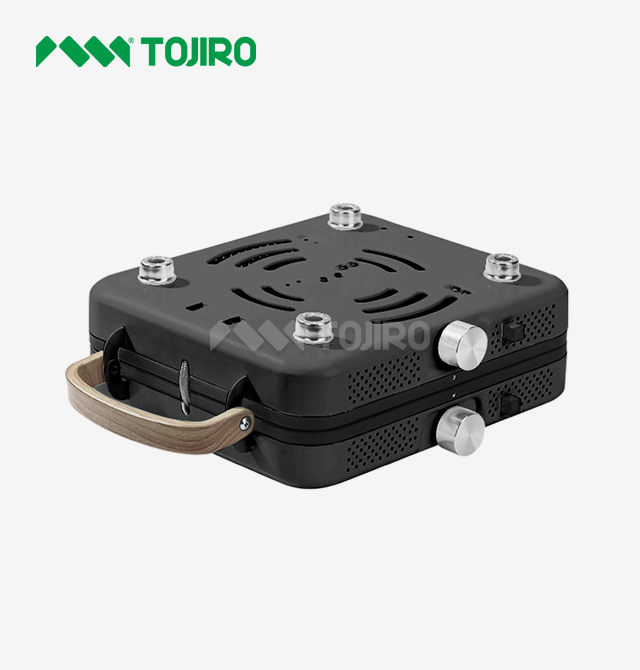
Portable cooking tools have come a long way since the days of simple camping stoves. Today's commercial-grade units produce heat at a level suitable for restaurants in small, movable packages. The main difference between mobile, portable gas, and built-in types is how they are installed and how they can be used. With folded measurements of 245×210×59mm, freestanding units like the TOJIRO TJR-BK39 are truly portable. Semi-permanent installations, on the other hand, need their own countertop room. By knowing these differences, buyers can better match the specs of equipment to the way it will be used, whether it's for a food truck, a glamping resort, or an emergency.
Material Construction and Performance Impact
Longevity and heat spread are directly affected by the building materials used. Standard steel finishes don't fight corrosion as well as cold-rolled steel with a powder coating, which is what the TJR-BK39 type uses. This treatment can handle being exposed to water and changes in temperature over and over again, which is common in outdoor hospitality settings. Stainless steel versions look better and cost more, but they are better for business event planners and high-end campgrounds. Cast iron parts, especially hob assemblies, keep heat in well and make sure that cooking temperatures are even. With its cold-rolled steel construction and both open flame and infrared burner heads, the TJR-BK39 can be used for a variety of cooking methods and still maintain its structural integrity under heavy commercial use.
Fuel Options and Operational Considerations
The type of fuel you use for a mobile stove top affects your running costs, how much energy you use, and your effect on the environment. Gas-powered units that use propane or butane can quickly change the temperature and produce a lot of BTUs. For example, the TJR-BK39 has a power level of 2.3kW and produces 8000 BTUs per burner. In North America, propane is still easy to find and can be used with both European high-altitude tanks and US regular cylinders, giving buyers a choice. Electric and induction alternatives don't release emissions like combustion alternatives do, but they need stable power infrastructure, which makes them hard to use in rural areas.
With an average petrol use of 152g per hour per burner, rental companies and tour operators who plan long trips can accurately predict their fuel budgets. Voltage ignition systems, not piezoelectric starters, provide reliable lighting even when it's wet, where other systems fail.
How to Choose the Right Mobile Stove Top for Your Business Needs?
Assessing Application-Specific Requirements
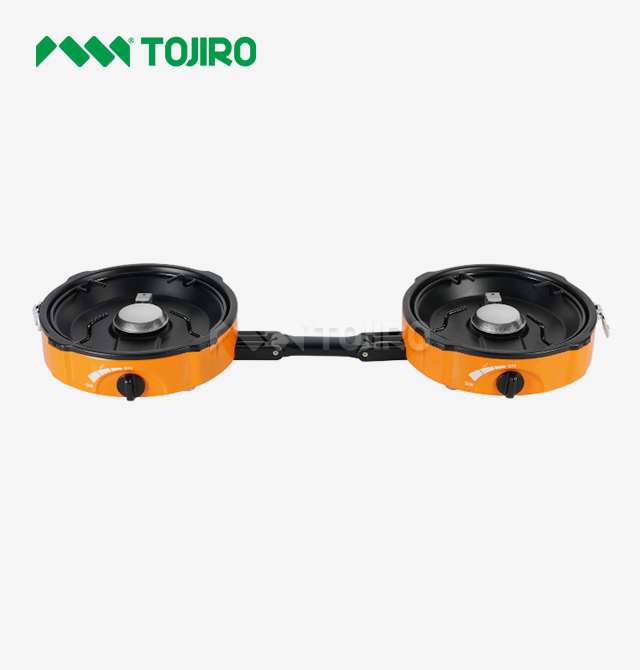
The business environment has a big impact on the choice of tools. Retailers and e-commerce platforms want to get rid of their stock quickly and offer competitive prices. To do this, they need suppliers with flexible MOQs and well-known brands. The TJR-BK39 has a minimum order size of 1000 units and a production cycle of 45 days, which lets you buy in bulk while keeping wait times manageable. Rental businesses and adventure tour companies need things that last a long time. Look for drop-test ratings like the TJR-BK39's 1-meter, 8-angle impact resistance, which shows that it will hold up during shipping and field deployment. Corporate dining customers care about both how things look and how well they work. Two-burner setups let two pots be used at the same time, which makes it easy to meet catering needs. Government and institutional buyers must make sure that the products they are buying follow all the rules and have the right safety approvals. These include the GB/T38522-2020 standards and any customisations that are needed for their area.
Evaluating Burner Capacity and Heat Distribution
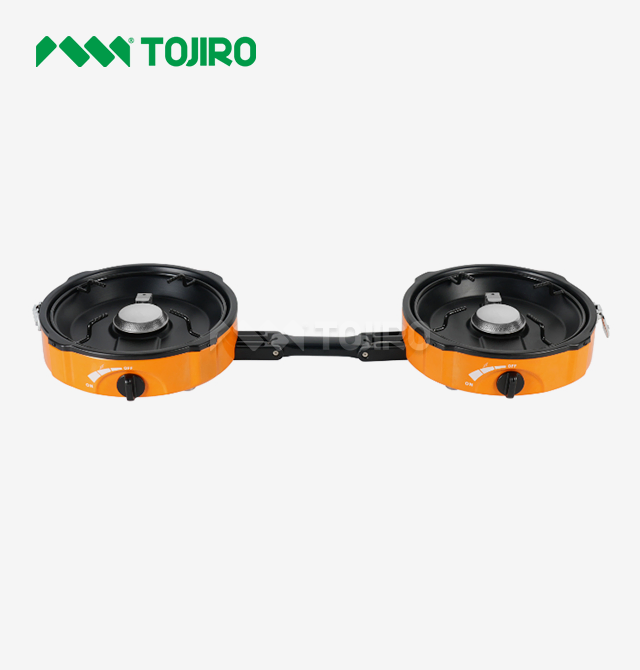
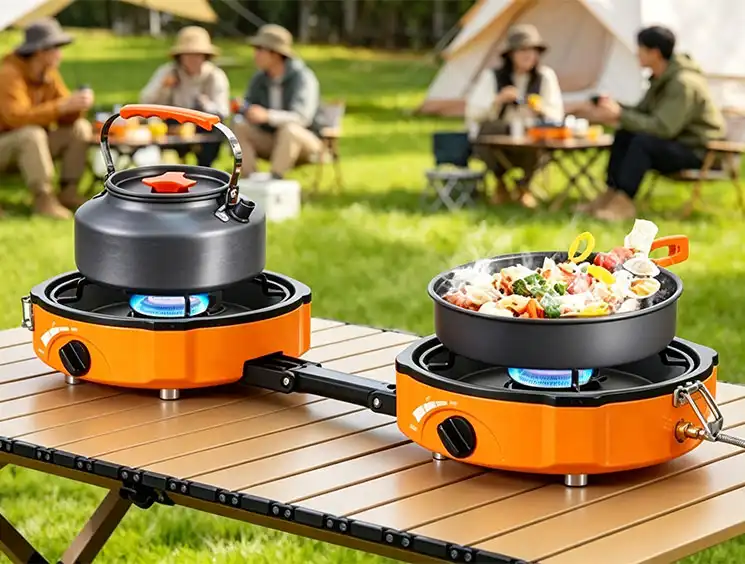
The amount of burners and their thermal output determine how much food can be cooked at once. Single-burner units are good for making simple meals, but dual-head models like the TJR-BK39 let you cook two things at once, like making the main dish and heating water. Each burner's 8000 BTU rating gives it enough heat to boil food quickly and sear it at high temperatures, which is important for commercial food service. Focused heat zones made possible by infrared burner technology are perfect for cooking in a wok or on a griddle, which makes the menu more flexible. It's important that the TJR-BK39 works with pots with bottom sizes between 10 cm and 20 cm, so you don't have to worry about stability when using normal cookware. Pressure-regulating valves keep the gas output steady even when the pressure in the tank drops. This means that the cooking stays reliable for long periods of time.
Portability and Storage Efficiency
Space limitations affect the choice of tools in every business sector. The TJR-BK39 mobile stove top's folding form cuts down on storage space by more than half. When folded, it goes from 268x210x117mm to 245x210x59mm. This small size is good for rental companies that keep their inventory in warehouses and dining places that don't have a lot of space to store equipment. Standard packing of four units per kraft paper box makes the best use of shipping containers and lowers the cost of freight for large orders.
When event planners move equipment from one venue to another, weight is an important factor. Making units lightweight without sacrificing durability ensures that staff can set them up safely. Features that are easy to clean, like high-temperature oil and water spray trays that can be taken off, cut down on repair work. This is especially helpful for rental businesses that need to clean equipment between customers' reservations.
Step-by-Step Installation and Maintenance Guide
Site Preparation and Safety Protocols
Site evaluation is the first step in a proper installation. Level surfaces keep pans from moving around and make sure that the flame spreads evenly across the stove. Minimum 12 inches of clearance from flammable materials on all sides and 24 inches of clearance above meet NFPA guidelines that are widely used in North America. Different types of fuel need different amounts of ventilation. For example, gas-powered units need enough air flow to keep carbon monoxide from building up, especially in partially enclosed hotel buildings. To unfold the TJR-BK39, you just need to lift the burner assembly into place and lock the support legs in place. You don't need any tools to do this. To place a gas canister, you have to line up the notched interface and push down on the lever mechanism until a safe connection is made. Before lighting, you should always use a soapy water solution to check for leaks around connection points. Look for bubbles, which means gas is escaping.
Routine Cleaning and Performance Optimization
Cleaning equipment regularly keeps it working well and extends its life. Let all the parts cool down totally before taking the whole thing apart after each use. The TJR-BK39's removable spray tray collects grease and food scraps, making cleanup easier than with designs that use a fixed tray. Mild detergent and pads that don't scratch keep powder coating from getting damaged while getting rid of residue. Burner ports need to be checked on a regular basis; clogged holes make the flame less good and use more fuel. Blockages can be removed with a thin wire or compressed air that doesn't hurt the openings. Every three months, check the seals and connection parts and replace any that show signs of wear or damage from tension. Corrosion can be avoided by storing units in dry places. This is especially important for cold-rolled steel building in humid coastal or tropical areas where hospitality businesses often use equipment.
Troubleshooting Common Operational Issues
Ignition failures are usually caused by empty canisters, wet electrical parts, or connections that aren't lined up right. The TJR-BK39's voltage lighting method works better than piezoelectric ones when it's wet, but the contact points still need to be cleaned every so often. Flame patterns that aren't the same show that the burner port is blocked or that the pressure isn't right. Check the function of the regulator valve and clear out any obstructions. If you use more petrol than the recommended 152g per hour, it means there are leaks or problems with the valve. Turn off the fuel supply right away and check all the connections. Having access to replacement parts is very important for keeping operations going. TOJIRO's one-year warranty and service infrastructure make sure that customers can get genuine parts instead of aftermarket ones that might not meet safety standards. Teaching employees basic fixing cuts down on downtime and the cost of service calls. This is especially helpful for rental companies that manage groups of equipment that are spread out.
Procurement Tips: Where and How to Buy Mobile Stove Tops Efficiently?
Supplier Evaluation and Authentication
Screening makers separates reliable providers from dishonest ones. ISO certification shows that a company is dedicated to standardising quality management, which lowers the number of defects and makes sure that all production runs are the same. Tojiro's ISO compliance and use of both traditional Japanese craftsmanship and modern industrial processes give retailers building their inventory and OEM partners white-labeling products peace of mind about quality. Before agreeing to a minimum order quantity, ask for sample units. A physical inspection shows things about the build quality, consistency of the finish, and how the product works that specs alone can't. Check the certification paperwork—CE marks for European markets and UL listings for North American distribution—to make sure the goods meet the safety standards in each area without causing costly delays at customs.
Negotiating Bulk Purchase Agreements
If you commit to buying a lot, you can get better prices and terms. The TJR-BK39's 1000-unit MOQ makes it a good choice for established stores and large-scale rental businesses, but it could be hard for smaller wholesalers who are testing the market demand. Talking about customisation choices, like changing the logos, the packaging, or the specifications, adds value without necessarily making the per-unit cost go up by a lot. Payment terms have a big effect on cash flow. Instead of full advance payment, arrange milestone-based schedules to protect capital until shipment proof. Due to the 45-day production cycle, buyers must plan ahead in line with seasonal demand patterns. For example, buyers in the hospitality industry should place their orders before the camping season in the spring, and disaster relief agencies keep rolling contracts to make sure they have supplies on hand quickly during emergencies. Knowing the wait times keeps you from running out of stock during busy times and keeps you from having to pay a lot for expensive air freight to make up for planned mistakes.
After-Sales Support and Warranty Considerations
The infrastructure for service goes beyond the initial purchase of a mobile stove top. TOJIRO's one-year guarantee covers defects, but make sure you understand the fine print, like what parts are covered, whether labour costs are covered, and how to file a claim. Rental companies benefit from extended warranty choices that cover equipment that is used a lot. These terms should be negotiated when the equipment is first bought, not when it is bought later. The long-term total cost of ownership depends on how easy it is to get replacement parts. Suppliers who keep a large inventory of parts reduce downtime compared to manufacturers who need to ship every service request overseas.
It's important that technical help is easy to get to, especially for business buyers who are in charge of handling tools at multiple places. Responding quickly to emails at [email protected] is helpful for procurement departments because it keeps records, and phone support lets you fix problems right away. Building ties with providers who care about the success of their customers is better than doing business with them.
Top Mobile Stove Top Brands and Latest Market Trends in 2026
Leading Manufacturers and Market Positioning
There are both well-known names and new, creative companies in the portable cooking tools market. TOJIRO stands out because it knows how to make things in a way that combines traditional Japanese accuracy with modern production efficiency. This method provides the dependability that is needed for business uses while keeping prices low for large buyers. Their ability to customize—they can work with both European high-altitude gas canisters and US propane standards—shows that they are flexible in the market, which is something that OEM partners value. New names often fight only on price, but well-known companies keep the supply chain stable, which is very important when there are shortages of materials or problems in other countries. Retail sell-through rates are affected by how well-known a brand is; well-known names move off the shelves faster than lesser-known alternatives. This has a direct effect on inventory turnover rates, which are what make retailers money.
Energy Efficiency and Sustainability Initiatives
Environmental concerns are becoming more and more important in procurement decisions. Gas-powered units, like the TJR-BK39, have a smaller carbon footprint per BTU output than coal- or wood-burning units, which are still popular in developing countries. Infrared burner technology focuses heat directly on the food being cooked instead of heating the air around it. This saves 15-20% of fuel compared to traditional open-flame designs. Some manufacturers are looking into hybrid systems that use both gas and renewable energy, but these are still fairly specialised uses. Buyers who care about the environment care about sustainable packaging. Kraft paper boxes replace plastic-heavy options, which is better for the environment and for landfills. More and more, corporate hospitality customers want sustainable paperwork when they buy equipment. This forces sellers to provide lifetime studies and carbon footprint estimates that support ESG reporting requirements.
Smart Features and IoT Integration
Using digital technology together is becoming more unique. Basic models rely on mechanical stability, while high-end models come with temperature sensors, remote ignition systems, and ways to track usage through smartphone connections. These features help rental businesses by keeping track of how often equipment is used and predicting when it will need repair. This keeps equipment from breaking down during customer bookings. Food truck owners use app-controlled temperature accuracy to make sure that recipes are always the same for all of their food items. But electronic parts can break down in rough outdoor conditions. Traditional mechanical designs, like the TJR-BK39's voltage ignition, find a good balance between dependability and usability. Managers in charge of buying things should think about whether digital features are useful enough to support higher costs and possibly more complicated upkeep, or whether tried-and-true mechanical systems are better for uses that need to last.
Conclusion
When buying a mobile stove top strategically, you need to do more than just compare prices. Long-term value is based on things like the quality of the materials used, how well they work with fuel, safety certifications, and how reliable the supplier is. The TJR-BK39 is a great example of a commercial-grade design that balances portability with dual-burner capacity. It can be used in a wide range of settings, from hotels and restaurants to schools and hospitals.
Checking for ISO compliance, asking for samples before committing to large orders, and building relationships with suppliers that put service above business trades are all good things for buyers. As the market changes due to concerns about sustainability and efficiency, choosing equipment that has been proven to last and comes with a full guarantee protects purchase investments and supports operating excellence in tough business settings. By matching specs to specific business uses, like store distribution, rental operations, or OEM partnerships, you can be sure that equipment will work as it should for a long time.
FAQ
1. What critical factors determine the best portable cooking equipment for commercial use?
The most important thing is durability over many transport and deployment rounds, especially for rental businesses. Check the quality of the construction materials, the pressure regulator, and the drop-test certifications. The amount of BTU output changes how fast food cooks. Most commercial uses only need 8000 BTU per burner. By following area safety guidelines, you can avoid problems with the law. Downtime costs are kept to a minimum by warranties and the availability of new parts.
2. How do gas-powered units compare to electric alternatives for outdoor hospitality applications?
Gas models are useful for glamping sites and rural event settings because they can be set up in places that don't have electricity. They let you change the temperature right away and don't depend on the grid being reliable. Even though electric units don't produce any emissions, they need a generator to work when they're not connected to the power grid, which makes the equipment more complicated and makes more noise. With an average petrol use of 152g per hour, accurate operational cost forecasting is possible.
3. Why does minimum order quantity matter when evaluating suppliers?
MOQ levels like 1000 units show that the maker is more interested in business buyers than in retail customers. This focus is usually linked to better infrastructure for B2B support, the ability to customise, and consistent output. Lower MOQs could mean that the business is smaller and doesn't offer as much guarantee support or quality control. Retailers and rental companies that have been around for a while can get better prices when they buy in bulk, which smaller purchases can't do.
Ready to Source Your Commercial Cooking Equipment?
TOJIRO makes movable cooking systems that are ISO-certified and made for tough industrial use. As a mobile stove top maker with a lot of experience, we sell the TJR-BK39 dual-burner system and make custom setups for stores, hotel owners, OEM partners, and institutional buyers all over North America. Our 45-day production cycle adapts to seasonal needs while upholding quality standards that have been proven by thorough testing. You can get a one-year warranty, quick technical support, and the ability to make changes that meet local fuel standards and branding needs. You can email our procurement experts at [email protected] to talk about volume pricing, changes to specifications, and shipping times that work with your business's plan.
References
1. Anderson, M. & Roberts, K. (2023). Commercial Portable Cooking Equipment: Procurement and Performance Standards. Industrial Food Service Publishers.
2. Chen, L. (2024). "Material Science in Outdoor Cooking Appliances: Durability and Efficiency Analysis." Journal of Hospitality Equipment Technology, 18(2), 145-167.
3. National Fire Protection Association. (2023). NFPA 58: Liquefied Petroleum Gas Code. NFPA Standards Council.
4. Peterson, R. (2024). B2B Procurement Strategies for Hospitality Equipment: A Buyer's Handbook. Hospitality Management Press.
5. United States Environmental Protection Agency. (2023). Energy Efficiency in Commercial Cooking Appliances: Technical Guidelines. EPA Commercial Equipment Division.
6. Yamamoto, T. & Foster, D. (2024). "Fuel Efficiency Comparisons in Portable Gas Cooking Systems." International Journal of Energy Applications, 31(4), 289-304.

USER EVALUATE
Here is the customer's evaluation of us
_1763619738116.webp)