



Best portable stove top options for camping trips
When B2B buyers and procurement professionals look for the best portable stove tops for camping trips, they need options that balance performance, durability, and cost-effectiveness. A mobile stove top is more than just a cooking tool; it's also a valuable asset for stores, rental businesses, corporate hospitality providers, and institutional buyers. Businesses can make better inventory choices that keep customers happy and encourage them to buy again by understanding how modern camping stoves meet a wide range of operating needs.
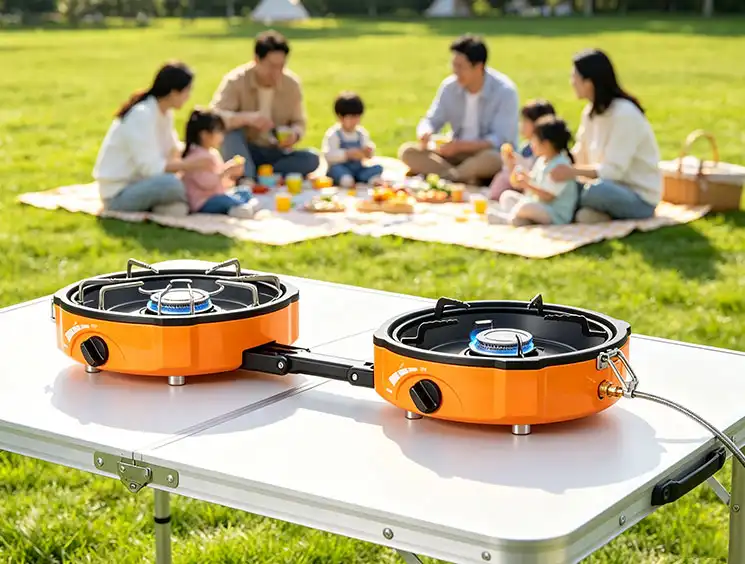
Understanding Portable Stove Tops for Camping
The market for camping stoves has changed a lot over the years, and now there are options for both leisure and business use. Portable cooking equipment is now used in many fields, from outdoor gear stores stocking their shelves to disaster aid groups putting together emergency kits.
Defining Modern Camping Stoves
Compact camping stoves include gas-powered (consistent heat, wide temperature range), electric (for campgrounds with hookups), induction (precise control for high-end events), and battery-powered (where fuel transport is difficult). Each type targets different users—retailers stock diverse options, rental businesses prioritize durability, corporate buyers value setup ease and aesthetics, and OEM partners seek customizable platforms for local fuel standards and branding.
Key Benefits for Commercial Applications
Rental fleets and hospitality services reduce operational costs through energy efficiency. Modern stoves optimize fuel use, lowering supply chain costs and extending field time. Multi-fuel equipment simplifies procurement and fleet management. Automatic ignition and pressure-regulating valves prevent gas buildup and user errors, reducing liability. Compliance with standards like GB/T38522-2020 streamlines institutional purchasing. Adaptability ensures consistent performance across elevations, coastal moisture, and deserts—distinguishing professional-grade gear from consumer alternatives.
Top 5 Portable Stove Top Options for Camping Trips in 2026
To evaluate outdoor stoves, you need to look at performance factors that can be measured. The amount of heat, measured in BTUs, affects how fast and in what ways you can cook. Fuel economy affects both the cost of operations and the difficulties of refueling. Shipping costs and storing needs are affected by how portable something is and how big it is when packed. Safety approvals and warranties show that the maker cares about quality and customer service after the sale.
Gas-Powered Portable Stoves
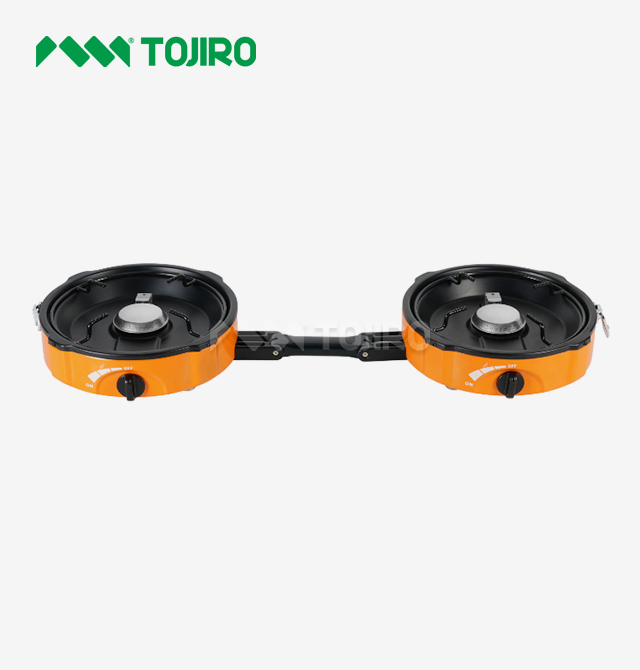
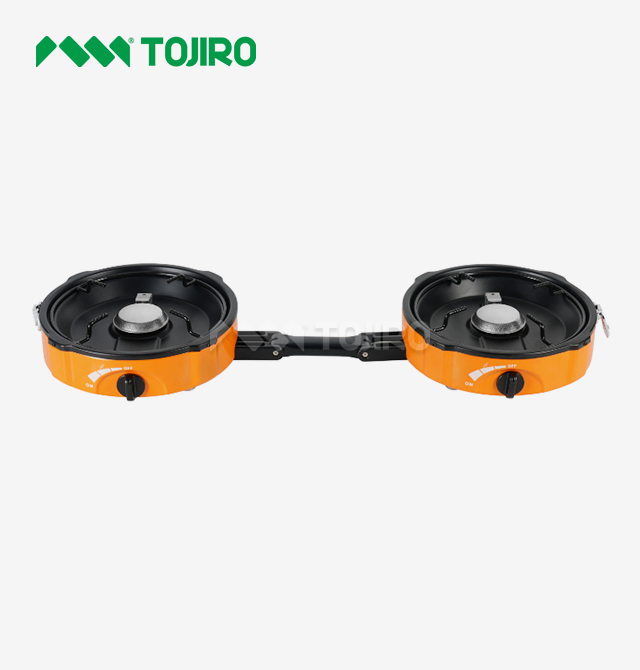
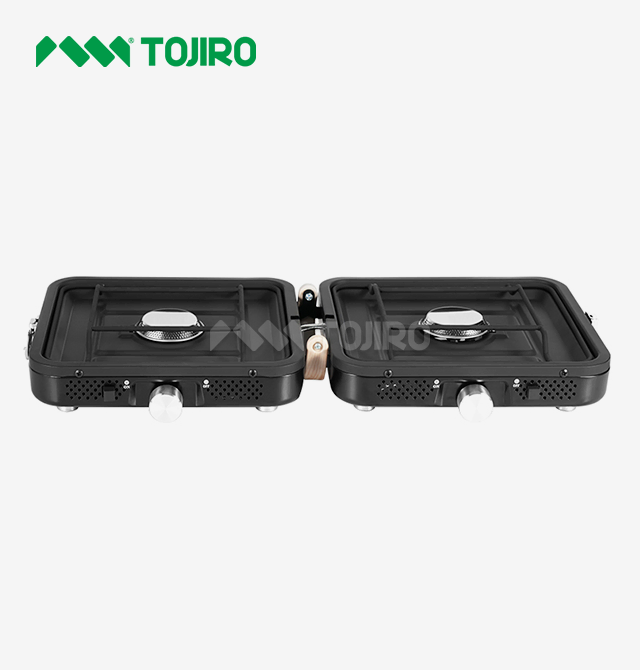
Evaluate stoves by measurable factors: BTU output (cooking speed and methods), fuel economy (operational costs), portability (shipping and storage), and safety certifications/warranties (manufacturer quality commitment). The TOJIRO Shell Stove (TJR-BK39) features 2.3kW power and 8,000 BTU per burner, dual-burner design for simultaneous cooking, cold-rolled steel with powder coating, pressure-regulating valve for steady gas flow, and packaging that withstands one-meter drops from eight angles—reducing replacement costs.
Induction Camping Stoves
Induction technology suits glamping sites and RV parks with electrical infrastructure, offering precise temperature control and energy savings for a mobile stove top. No open flames reduce fire risk in controlled environments. Electromagnetic heating improves energy transfer and reduces ambient heat—usable in tight spaces. Maintenance is simple with only electrical components. However, induction requires ferromagnetic cookware and reliable power sources, limiting field use compared to fuel-based options for mobile stove top applications.
Electric Resistance Stoves
Electric coil and ceramic plate stoves suit applications prioritizing safety and simplicity over performance. Schools and outdoor programs choose electric models to reduce fire risk and eliminate fuel-handling training. Simple operation requires less supervision. BTU outputs are lower than gas options, meaning longer cooking times—acceptable where safety outweighs speed. Bulk purchase prices remain competitive, and operations management simplifies without fuel supply logistics.
Battery-Operated Mobile Cooking Solutions
Battery-powered stoves serve situations where fuel or electricity access is limited. Self-contained power systems benefit emergency response teams and remote expedition organizers. Portability and independence are key advantages, but battery capacity limits runtime and heat output compared to fuel-based units. Current battery technology restricts cooking duration and power. Businesses planning long-term purchases should monitor this evolving category as energy storage improves.
Hybrid and Multi-Fuel Systems
Advanced multi-fuel models provide maximum deployment flexibility, allowing organizations to adapt to regional fuel availability while maintaining fleet consistency. Training and maintenance simplify with a single system rather than multiple equipment types. Multi-fuel capability is especially valuable for international operations and organizations deploying equipment globally. Higher initial investment costs are often offset by reduced logistics complexity and improved operational resilience over time.
How to Choose the Best Portable Stove Top for Your Business Needs?
For procurement to go well, operating needs must be matched with equipment specs. Businesses need to look at how different features fit with their needs, the needs of their customers, and their budgets.
Matching Products to Business Profiles
Retailers and e-commerce sites put a high value on how quickly their product is sold. Products that have a well-known brand and reasonable prices move quickly. White-label opportunities help businesses stand out in crowded markets. Different types of fuel should be kept on hand to suit different customer tastes, but this makes the collection more complicated. The sweet spot is where the number of SKUs is just right for easy management.
Rental and experience companies want things to last a long time and not need much maintenance. Failure of equipment while customers are using it hurts the company's image and costs money in repair fees. Business operations are kept safe by choosing strong designs with a history of dependability. Cleaning and upkeep that are easy cut down on the time between rents, which increases the rate of asset utilization.
Corporate and leisure clients look at both how things look and how well they work. At events or resorts, having equipment that looks new and well-kept improves how people think of your brand. The ability to buy in bulk and discounts for doing so have a big effect on how the budget is allocated, and making setup easy cuts down on the cost of labor during event planning.
OEM and white-label partners need to be able to make changes and have low minimum order amounts. Manufacturing know-how and engineering support make it easier to adapt a product to the needs of a specific market. Reliability in lead times affects go-to-market schedules, so production capacity and delivery history are important factors to consider when evaluating suppliers.
Government and institutional sellers have to follow strict rules when they buy things, with a focus on standardization, safety certifications, and compliance paperwork. Products that meet well-known standards make the approval process easier. Rugged construction makes sure that it will last in tough situations, which increases the value for taxpayers. Total cost of ownership is lowered by infrastructure for after-sales support, such as easy access to service centers and steps for filing insurance claims.
Core Performance Metrics
Heat flow determines how fast and what kinds of foods can be cooked. Higher BTU ratings are needed for tasks that need to boil something quickly or sear something at a high temperature, while lower output ratings are fine for easier heating tasks. By matching heat capacity to actual use cases, you can avoid paying too much for performance that you don't need.
Fuel suitability and rates of use have a direct effect on running costs. Gas use of 152g per hour on average helps businesses figure out how much gas they will need for certain launch times. Understanding how fuel economy works lets you make accurate cost estimates and negotiate with suppliers in a smart way.
Both weight and packed size are factors that affect how portable a mobile stove top is. Shipping costs and store room needs are cut down by folding profiles into a smaller size. When folded, the TJR-BK39's dimensions of 245×210×59mm make it ideal for efficient packaging, as they allow four units per carton and lower freight costs for large orders.
Durability and build quality are what set long-term investments apart from short-term purchases. The construction is made of cold-rolled steel with protective coatings that keep corrosion and impact damage at bay. Materials that meet worldwide ISO standards guarantee quality and lower the number of failures.
Warranty coverage and help after the sale show that the maker trusts the customer and wants to keep them. The usual warranty of one year provides good protection, and quick expert help fixes any problems with operation. For large fleet deployments, bulk service agreements can offer better support.
Cost-Benefit Analysis for Procurement
The purchase price is only one part of the total cost of ownership. Fuel economy changes the costs of running a business. The need for maintenance uses up labor resources. The number of replacements has an effect on capital plans. Unexpected fix costs are lower when you have a warranty.
For models like the TJR-BK39, the minimum order number of 1,000 units is good for big companies that need to make long-term inventory promises, but it could be hard for smaller companies or companies that are trying out new product categories. The 45-day lead time means you need to plan ahead, but it shows that the factory can keep up with demand and that delivery expectations are reasonable.
When you buy in bulk, you can usually get better prices and more customization options. Companies that are ready to place bigger orders have more bargaining power and can ask for specific changes to meet regional needs or brand preferences.
Mobile Stove Tops vs Other Portable Stove Types: An In-Depth Comparison
Knowing the differences between the different types of stoves helps procurement professionals choose the best solutions. Each technology has its own benefits that help with different business objectives.
Performance and Operational Characteristics
Compared to electric models, small stoves that run on gas produce more heat and use less fuel. They work without being connected to electricity, which gives you the freedom to put them in a lot of different places. Different parts of the country have different fuel supply, but propane and butane cylinders are still easy to find across North America.
Mobile stove top designs that focus on folding up small and being light are good for situations where movement is important. The trade-off between toughness and weight reduction needs to be carefully thought through based on how the item will be handled and transported.
Induction technology lets you precisely control the temperature and makes things safer because it doesn't use flames. The need for electricity and the incompatibility of tools limit the types of situations that can be used. Costs of doing business depend on electricity rates, which change a lot from place to place and may be higher than the cost of fuel in some areas.
Maintenance and Lifecycle Considerations
The fuel lines, pressure regulators, and burner parts on gas stoves need to be checked every so often. Leaks can be avoided and steady performance is guaranteed with regular upkeep. Cleaning means getting rid of cooking residue from burner heads and keeping metal surfaces from rusting. These jobs only need basic tools and a small amount of technical know-how.
Electric and induction types make upkeep easier because they don't need parts of the fuel system. When cleaning, the main focus is on taking care of the cooking surface and the electricity connections. Longer service times may be possible because the mechanical parts aren't as complicated, but fixing electronic parts may take special skills.
Battery-powered systems need more maintenance for the energy storage. The life and dependability of a battery are both affected by how healthy it is over time. The cost and availability of replacement batteries affect long-term operating costs.
Supplier Reliability and Support Infrastructure
When you evaluate a manufacturer, you look at their production capability, quality control methods, and how quickly they respond to customer service requests. Companies that follow international ISO standards show that they are dedicated to quality that doesn't change. Certification flexibility, which means that makers can try to meet different regional standards, shows that they are technically capable and can change to new markets.
The quality of after-sales support tells you which suppliers are reliable and which ones are troublesome. The speed at which warranty claims are processed, the availability of technical support, and the stock of extra parts all have a direct effect on operating stability. Service networks and big support deals that are already in place help businesses that deploy equipment fleets.
Strategic value is increased by being able to tailor goods to specific uses. OEM and white-label partnerships need makers who know a lot about tech and can change the way they make things quickly. Reasonable business practices include minimum order quantities that balance the efficiency of the manufacturer with the investment risk of the buyer.
Maintenance Guide and Best Practices for Portable and Mobile Stove Tops
Maintenance that is done correctly makes sure that equipment lasts longer and works reliably. Systematic care protocols are helpful for businesses that take care of rental fleets or hospitality equipment.
Routine Cleaning and Inspection
Regularly cleaning the burner head is the first step in maintaining a gas stove. Carbon layers and cooking residues stop gas flow and lower heat output. By taking off the burner parts, you can clean them thoroughly with the right tools and solvents. Checking gas connections for damage or wear stops leaks that are unsafe and wasteful.
Models like the TJR-BK39 have a high-temperature oil and water spray tray that makes cleanup easier by collecting drips and keeping the burner clean. This design cuts down on upkeep time and keeps cooking residue from getting on important parts.
Protective coats on cold-rolled steel surfaces keep them from rusting, but they need to be taken care of. Avoiding rough cleaners helps keep the finish's purity. Moisture harm can be avoided by storing things in dry places. These simple steps will greatly increase the life of your mobile stove tops.
Fuel System Maintenance
Pressure-regulating valves need to be checked on a regular basis to make sure they deliver gas consistently. As part of testing, flame characteristics and heat output consistency must be watched. When performance isn't consistent, it could mean that valves are wearing out or getting dirty, which needs professional service.
Before each use, gas tanks and communication places need to be checked. Leaks happen when threads are damaged or seals are worn out. These leaks waste fuel and put people in danger. Field problems can be avoided by replacing worn-out parts before they break.
Troubleshooting Common Issues
Electronic igniting systems often fail to spark when the batteries are low or when the igniter contacts are dirty. Most problems can be fixed by cleaning the starting parts and putting in new batteries. Problems that don't go away could mean that there are greater electrical problems that need maker help.
Uneven heating or less output is usually caused by problems with the pressure regulator or the burner getting clogged. Systematic inspection finds the root causes and helps with the right fix.
After-Sales Support and Service Infrastructure
Authorised service centers and expert help routes are kept up by reputable manufacturers. Knowing what the warranty covers and how to file a claim before you buy will make sure that any problems are handled smoothly. Some bulk purchase deals include better support features, such as faster service or specialised expert contacts.
Accessibility of service infrastructure is important, especially for businesses that do business in large areas. Centralised repair services might not work, so being able to connect to a local support network is an important factor in the decision-making process.
Conclusion
To choose the best portable cooker tops for camping trips, you have to weigh the performance specs against the needs of the trip and your budget. Models that run on gas, like the TOJIRO TJR-BK39, consistently produce heat, use fuel efficiently, and have a track record of longevity that makes them perfect for business use. To make smart buying choices, you need to know how different technologies help different types of businesses, like how retailers want to quickly sell their stock and how institutional buyers need to see proof of compliance. The real value of an item goes beyond its purchase price when you look at its total cost of ownership, which includes the cost of repairs and the level of customer service after the sale. Companies that buy good outdoor stoves from well-known brands set themselves up to meet customer needs and run their businesses as efficiently as possible with a quality mobile stove top.
FAQ
1. What fuel types work with mobile stove tops, and how do I choose?
Portable stoves that run on gas usually work with either high-altitude tanks that use isobutane mixes or regular propane cylinders. Standards in Europe and North America are different, so making sure they work with power sources that are available locally keeps operations from being interrupted. Dual-fuel types give you the most options because they can adapt to changes in the supply chain and the weather in different areas. The choice of fuel relies on the placement height, the temperature range, and the ease of transport. Propane works reliably in cold weather, and small tanks are good for camping where a mobile stove top needs to be lightweight.
2. Are portable stoves safe for enclosed camping environments?
When using gas stoves inside of tents or RVs, there needs to be enough air flow to keep carbon monoxide from building up. Even though manufacturers make sure their products meet safety standards, it is still important to follow the right way to use them. Accidents can be avoided by keeping things away from burning materials and making sure they are placed securely. Electric and induction models don't produce any byproducts of combustion, so they are safer options when access to electricity is available. When businesses sell tools to customers, they should include safety directions and guidelines for how to use it so that they don't get sued.
3. What warranty and support should I expect from suppliers?
Manufacturers with a good reputation will cover flaws in materials and workmanship for at least one year. After-sales support should include technical help that is easy to get and spare parts that are easy to find. Businesses that buy in bulk can negotiate better service agreements that give them more support and coverage. Future operating risks can be cut down by checking how responsive and well-equipped the manufacturer's service infrastructure is before placing big orders.
Partner with TOJIRO for Premium Mobile Stove Top Solutions
TOJIRO makes camping stoves that meet strict business standards by combining traditional Japanese craftsmanship with current manufacturing technology. As a mobile stove top maker with a lot of experience, we know what stores, rental businesses, hospitality providers, and institutional buyers need. Our TJR-BK39 model shows that we care about longevity, performance, and easy-to-use design. It comes with ISO-compliant quality systems and a one-year guarantee.
We offer full ODM and OEM services, which let white-label partners make goods that fit the needs of specific markets. Our 45-day production cycle lets you plan your goods, and our flexible minimum order numbers make it easy for businesses that are growing. Get in touch with our purchasing team at [email protected] to talk about buying in bulk, making changes, and technical details.
References
1. Anderson, M. (2023). Commercial Outdoor Cooking Equipment: A Procurement Guide for Hospitality Professionals. Outdoor Industry Press.
2. Chen, L., & Rodriguez, P. (2024). "Comparative Analysis of Portable Stove Technologies for Commercial Applications." Journal of Outdoor Equipment Engineering, 15(2), 78-94.
3. International Organization for Standardization. (2020). Portable Gas Stoves for Outdoor Use: Safety and Performance Standards. ISO Technical Committee 238.
4. Miller, R. (2023). Fuel Efficiency and Cost Analysis in Commercial Camping Operations. Adventure Business Publications.
5. National Park Service. (2024). Equipment Procurement Guidelines for Outdoor Recreation Facilities. U.S. Department of the Interior.
6. Williams, T., & Zhang, H. (2024). "Evolution of Portable Cooking Systems: Meeting B2B Market Demands in Outdoor Recreation." Commercial Camping Industry Quarterly, 8(1), 45-62.

USER EVALUATE
Here is the customer's evaluation of us
_1763607940917.webp)
_1763607672511.webp)
_1763606719875.webp)