


What are the safety features to look for in a mobile stove top?
It's important to know about important safety features when looking at mobile stove tops for big purchases or rental businesses. To keep people from getting hurt while using a mobile stove top, it needs to have automatic shut-off systems, flame failure devices, and materials that can handle high temperatures. These parts cut off the fuel supply when the flames go out suddenly. This keeps petrol from building up and protects people from getting burnt. In addition to these basic safety features, you should also look for stable bases to lower the risk of tipping over, pressure-regulating valves to make sure of steady fuel supply, and approval that meets CE, UL, or CSA standards. When buying things for rental fleets, hotels, or OEM partnerships, procurement managers need to find devices that are both portable and have strict safety engineering. This is especially important when the mobile stove top has to be moved around a lot, is used by people with different levels of skill, and has to work in different outdoor conditions at camping sites, disaster relief sites, or corporate events.
Understanding the Importance of Safety Features in Mobile Stove Tops
The biggest problems with mobile stove tops are that it can catch fire and gas leaks. Mobile stove tops, on the other hand, have to deal with being moved all the time, being shaken up while being moved, and weather that is hard to predict. These stresses can make links loose, hurt fuel lines, or weaken the structure. Distributors who work with outdoor adventure companies and rental companies know that one problem can lead to liability claims, damage to a brand's image, and high insurance rates.
Following foreign safety standards is an important way to lower risks. The CE mark shows that a product meets European health and safety standards, and the UL mark shows that the product has been tested to meet North American safety standards. Approval by the CSA gives Canadian markets even more respect. These certifications are very important for OEM partners who want to sell products under their own brand names. Verified safety credentials speed up governmental approvals and lower the time it takes to get goods on the market in multiple countries.
Safety features have a direct effect on working effectiveness, in addition to meeting regulatory requirements. Accidents that could have been avoided cause mobile stove tops to break down, which messes up rental plans, requires emergency repairs, and makes customers unhappy. When the government buys things for national parks or crisis aid, they need to make sure that workers in remote areas with few emergency response resources follow standard safety rules. Hotels that offer camping experiences can't have equipment breakdowns that ruin the experience for guests or break the rules for hospitality insurance.
The math behind money also points to safe investments. Higher-quality mobile stove tops with strong safety features usually last longer, which lowers the total cost of ownership. When rental companies keep safety records for their mobile stove tops, they can get more customers because people trust brands they know they can depend on. E-commerce sites benefit from fewer returns and good reviews when safety features work as promised, which leads to more sales and recommendations.
Key Safety Features to Evaluate in Mobile Stove Tops
Before committing to large orders or forming partnerships with suppliers, procurement experts must look at a number of safety measures. Here are the main benefits of mobile stove tops that are safety-engineered:
1. Automatic Shut-Off Systems: These monitors notice when something isn't right, like when too much heat builds up, the engine runs for too long, or the fuel pressure changes. When limits are crossed, the device stops the flow of fuel right away, which stops fires or blasts. This feature is especially helpful for rental businesses where customers have different levels of skill and might forget to keep a close eye on the mobile stove top.
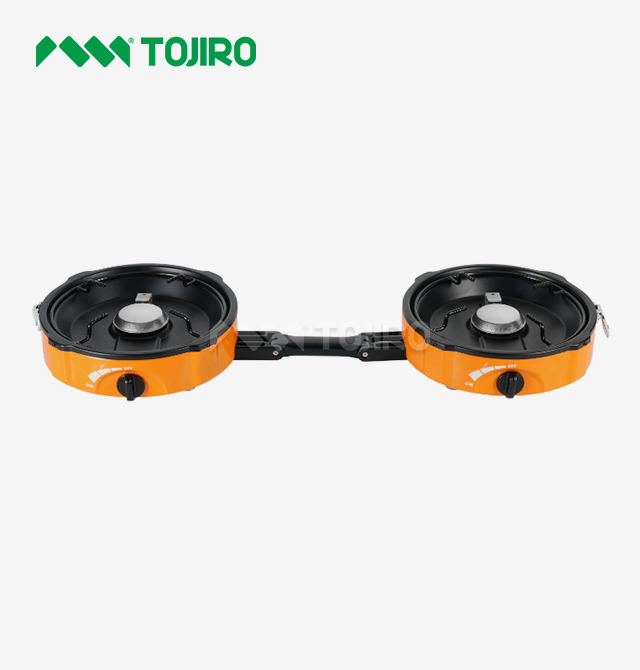
2. Flame Failure Devices: These parts, which are also called thermocouple safety systems, constantly watch the pilot lights and burner fires. If the light goes out because of wind, spillage, or something else, the gadget cuts off the gas supply right away. This keeps dangerous gases from building up in RVs, tents, and other temporary dwellings that are closed off. Models like the TOJIRO TJR-BK39 have voltage lighting systems that work with flame failure protection to make sure that the machine starts up reliably and that safety is always being monitored.
3. Heat-Resistant Construction Materials: Cold-rolled steel with a powder covering is good for both strength and letting heat escape. This mix of materials is used for both the furnace body and the water pan of the TOJIRO Shell Stove. This means that mobile stove tops can handle repeated thermal cycles without breaking down or warping. This way of building is in line with GB/T38522-2020 standards and works well in tough situations where mobile stove tops need to work for long periods of time in hot places.
4. Pressure Regulating Valves: Fuel supply that stays the same makes flames more reliable and lowers the risk of flare-ups. Pressure controllers make up for changes in canister pressure that happen when fuel runs out or when the temperature changes in the area. This technology is built into the TJR-BK39 so that the gas flow stays fixed at about 152g/hour per burner head. This lets people cook safely at different elevations and in all kinds of weather.
These benefits can help businesses with production issues, renting businesses with fewer accidents, and institutional buyers with large equipment fleets by making upkeep procedures easier.
Gas cylinder mobile stove tops also need safe ways to connect to the power source. The TJR-BK39 has a canister alignment device that stops installation mistakes, which are a frequent reason for leaks and uneven pressure. Drop tests from one meter at eight angles are used to make sure that mobile stove tops get at deployment sites in perfect working order. This is especially important for sending large amounts of mobile stove tops to remote campgrounds or disaster response sites.
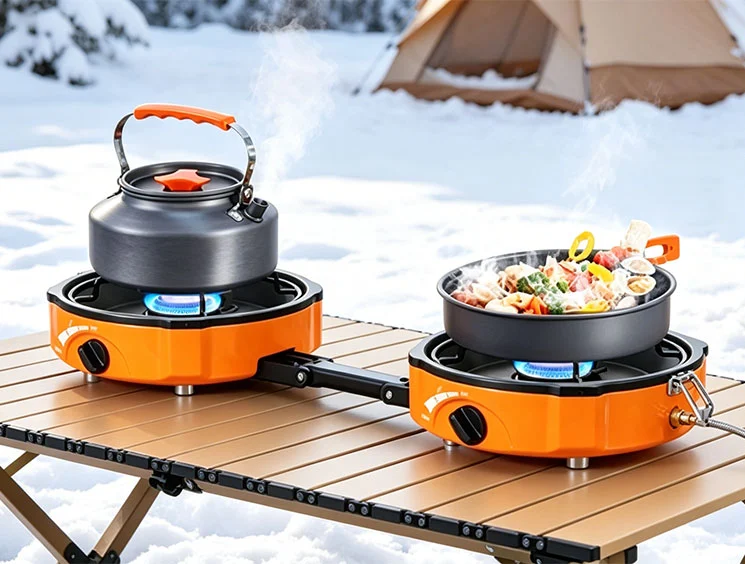
When a mobile stove top is used on rough ground, it needs feet that won't slip. Fold-out leg styles with rubberised feet make things stable on picnic tables, tailgates, or other makeshift outdoor surfaces. The TJR-BK39's unfolded dimensions (268 x 210 x 117 mm) make it stable enough for cooking up to 20 cm in diameter while still having a small footprint. It can fit normal camping pots and keep its low center of gravity.
Ventilation is important for more than just the mobile stove top itself. Even though different mobile stove tops might not have built-in vent systems, buying managers should make sure that the fuel type and BTU output are right for the places where the mobile stove tops will be used. Each TJR-BK39 burner head has an 8,000 BTU capacity, which is enough heat to quickly boil water without making too many burning byproducts when used outside in well-ventilated areas or in mobile food vehicles that are properly equipped.
Comparison of Safety Features: Mobile Stove Top vs Built-in & Portable Stove Tops
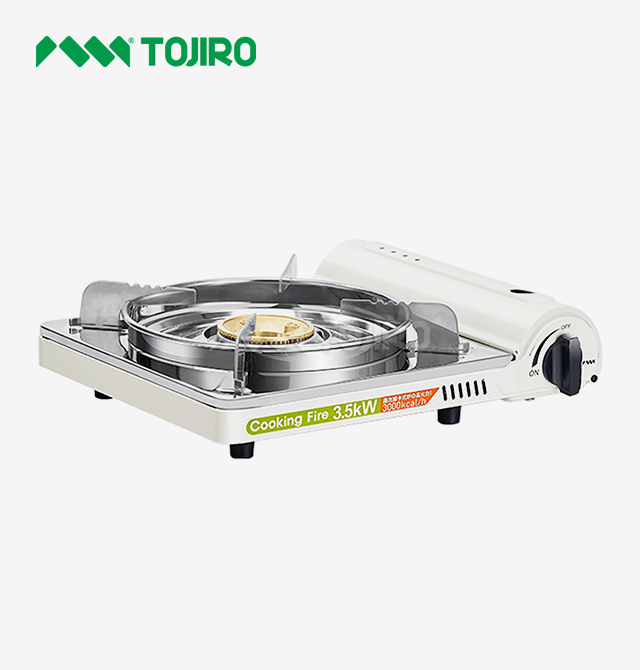
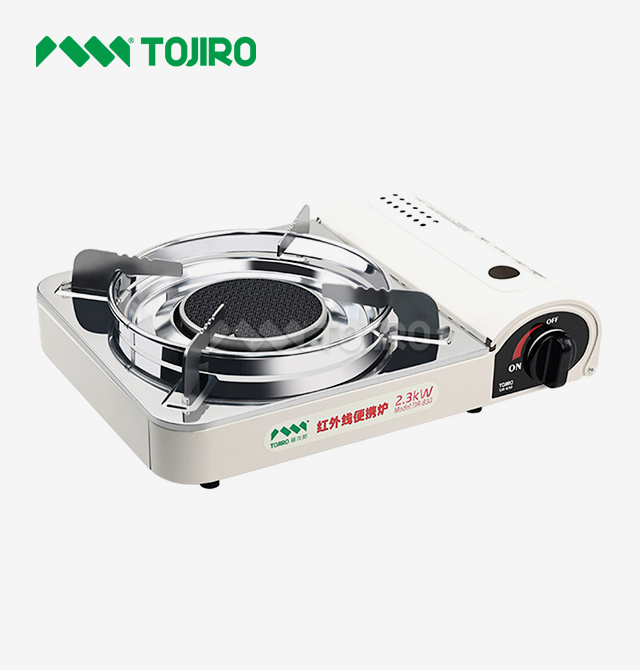
Built-in stoves offer strong safety advantages through fixed gas lines, permanent ventilation, and professional installation, which reduce risks but limit flexibility. Portable camping stoves are highly mobile but often compromise burner size, heat output, and structural safety to reduce weight. Mobile stove tops strike a balance, offering portability with near-fixed installation safety standards. Models like the TJR-BK39 provide two-burner capacity similar to home stoves, enabling simultaneous cooking for group settings such as tours, events, and shared camp kitchens. Fuel type significantly affects safety and usability: propane systems are widely used in North America for their energy density and cold-weather performance, while European-standard gas canisters support cross-regional use. The TJR-BK39 supports both systems, enabling OEM customization across markets. Electric versions eliminate open flames but depend on stable power, limiting use in remote or emergency environments. Infrared burner technology improves heat distribution and efficiency, reducing fuel consumption. Durable construction, repairability, and compact packaging further support long-term commercial deployment and cost-effective bulk logistics.
Maintenance and Inspection Practices to Ensure Safe Operation
Following regular repair procedures directly increases the life of mobile stove tops and keeps safety systems working. Rental companies should do pre-deployment checks to make sure connections are solid, starting systems work, and there is no damage from earlier use. These steps catch problems as they start to happen before the mobile stove top gets to the customers. This keeps the mobile stove top from breaking down in the field, which would ruin the experience and lead to complaints.
How often you clean depends on how often you use it. The TJR-BK39's high-temperature oil and water spray tray makes cleaning up after use easier, which is important for businesses that need to rent things out quickly. Degreasing can be done thoroughly without special tools because parts can be taken off. This means that staff with only basic training can keep mobile stove tops well. Grease buildup is a fire risk and hurts the performance of the mobile stove top, so being easy to clean is a safety feature in and of itself.
Wear on components shows up in a predictable way. Ignition systems usually need to be replaced after a few hundred rounds because the wires start to corrode and the wiring links become loose. Pressure controllers lose accuracy over time, so they need to be tested against known fuel pressure standards on a regular basis. Carbon buildups on burner heads stop gas flow and make flames that aren't even. Setting up regular replacement times based on what the maker recommends keeps problems from happening during busy rental seasons.
Getting new parts from authorised sellers protects your insurance and makes sure the parts will work with your system. The TOJIRO network supports parts and has 45-day production wait times for large orders. This lets dealers keep their spare parts inventory in line with the size and usage of their fleets. For institutional users who manage standard mobile stove tops in multiple places, this supply chain dependability is very important. Having uniform parts available makes technician training easier and cuts down on downtime.
Keeping records makes people responsible. Keeping track of inspection dates, part replacements, and fix records in maintenance logs can help find trends that point to design flaws or improper use of the system. This information helps buying officials decide whether to evaluate the performance of suppliers or think about upgrading mobile stove tops. When the government has to go through an audit, specific records that show they're following safety rules and public resource management standards are especially helpful.
Professional installation services are useful for complex operations, but they are less useful for mobile stove tops than for systems that are built in. When corporate clients set up semi-permanent outdoor kitchens for long-term events, techs may need to set up multiple mobile stove tops, make sure there is enough fuel, and teach staff how to use the kitchens properly. In competitive B2B markets, where full help is worth a higher price, suppliers who give these services set themselves apart.
How to Choose a Mobile Stove Top with Optimal Safety Features
Instead of general standards, selection criteria should be based on unique operational needs. Mobile stove tops with higher BTU values and pressure-regulating valves are preferred by commercial kitchens that use food trucks or catering trailers because they provide steady heat output and quick recovery between dishes. Casual campers who rent from rental groups stress how important it is to have easy-to-use starting systems and foolproof safety interlocks that cut down on customer service calls. When institutions buy emergency response gear, they need it to be very durable and work with standard fuel supplies that are kept in disaster planning stores.
A brand's image is built by consistently doing well in a wide range of situations. TOJIRO has built its reputation by using manufacturing methods that are in line with ISO standards and combine traditional Japanese artistry with modern industrial efficiency. When choosing partners for long-term supply deals or OEM partnerships that need tight quality control, this history is important. Suppliers who are ready to apply for approval in more than one legal framework show that they are committed to global market access, which is a trait that distributors looking to grow into new areas value.
The total cost of ownership, which includes the original purchase price, is based on the framework for after-sales assistance. Manufacturers with one-year guarantees and helpful customer service lower the risk for people who buy in bulk. Through ODM/OEM agreements, white-label partners can customise mobile stove tops to make their offers stand out while using safety engineering that has been used for years. TOJIRO's minimum order quantities of around 1,000 mobile stove tops are a good mix between economies of scale and the need for mid-sized distributors to handle their inventory when starting new product lines.
Protocols for testing back up what the maker says. Asking for pre-production samples lets you test the reliability of the lighting, the safety of the flame, and the quality of the build. Accelerated wear testing mobile stove tops like they've been used in the field for years, finding possible weak spots before placing big orders. Drop tests show that the packaging covers the mobile stove top well while it's being shipped. The TOJIRO standard, which says that it must be able to withstand one-meter drops from eight different angles, is the gold standard for shipping sturdiness.
When looking at different mobile stove tops side by side, you should compare the safety features and the overall value. A mobile stove top that costs 15% more but has automatic shut-off and flame failure safety may save you money in the long run by lowering the number of accidents, insurance claims, and replacements. However, buyers on a tight budget who are catering to rental markets that care about price might be okay with fewer safety features as long as the main ones meet the base standards set by regulators and the level of sophistication desired by customers.
Supplier ties go beyond just doing business and include partnerships. Strategic assets are vendors who give information about changes in regulations, new products from competitors, and new customer tastes. TOJIRO's decision to include both open flame and infrared burner heads in the TJR-BK39 shows that they are listening to customer requests for more cooking options. This shows that they are willing to change their designs as customer needs change.
Conclusion
People, property, and business names are kept safe in a variety of B2B settings by choosing mobile stove top equipment with full safety features. Baseline standards include automatic shut-off systems, flame failure devices, heat-resistant materials, and pressure regulation. What sets professional-grade mobile stove tops apart from consumer options are transport durability, repair accessibility, and certification compliance. Procurement managers who work with rental companies, hotels, government agencies, and OEM partnerships need to weigh the immediate costs against the total costs of ownership. They need to keep in mind that good safety planning lowers the risk of liability and downtime. As regulations change, suppliers need to be able to get certifications in more than one market. This helps businesses form long-term relationships as they grow geographically. Buyers can get safe, reliable mobile stove tops that work well in tough situations by focusing on well-known names with good customer service after the sale.
FAQ
1.What safety certifications should mobile stove top equipment carry?
For sales in Europe, look for the CE mark. For sales in the US, look for the UL mark. For sales in Canada, look for the CSA mark. These certificates show that the mobile stove tops have been tested by a third party against regional safety standards that cover fuel systems, ignition devices, and the flammability of materials. For example, government buyers need proof that they are following the rules for buying things.
2.How often should rental fleets inspect portable cooking equipment?
Do pre-deployment checks on each hire to make sure the connections are tight, the start works, and the mobile stove top is in good shape. Every 20 to 30 rental rounds, do thorough care like cleaning the mobile stove top and checking for wear on all parts. For high-volume operations, having a committed technician staff that does systematic fleet checks every three months and services each mobile stove top thoroughly helps keep safety performance uniform.
3.Do gas or electric units offer better safety profiles?
Gas systems get rid of the risk of electricity shock and keep working even when the power goes out, which is very important for emergency response uses. Electric mobile stove tops are good for places with strict fire rules because they don't have open flames. The best choice depends on the situation: places in the woods may want to be gas-powered, while business events inside may need electric models to follow building rules.
Partner with TOJIRO for Industry-Leading Mobile Stove Top Solutions
TOJIRO sells mobile stove tops that are made to meet the strict safety standards that rental companies, hotel workers, and public buyers all over North America demand. Our TJR-BK39 Shell Stove has a small, sturdy design that includes flame failure safety, pressure-regulating valves and voltage ignition systems. We help mobile stove top providers and white-label partners build brands based on proven safety performance with ISO-certified manufacturing, 45-day production processes, and full ODM/OEM customisation options. Each mobile stove top comes with a one-year guarantee and access to replacement parts to keep the fleet reliable over the long run. Our team can help you with technical specs, sample testing, and market-specific approval whether you're a mobile stove top maker looking for production partners or a wholesaler looking at bulk purchases for sale channels. Get in touch with [email protected] right away to talk about how TOJIRO's safety-focused engineering can help your product line and keep end users safe in tough operating settings.
References
1. National Fire Protection Association. (2021). Safety Standards for Portable Cooking Appliances in Commercial Applications. NFPA Publications.
2. American Society for Testing and Materials. (2020). ASTM F2593-20: Standard Specification for Portable Camping Stoves. ASTM International.
3. International Organization for Standardization. (2019). ISO 9001:2015 Quality Management Systems for Outdoor Equipment Manufacturing. ISO Standards Catalogue.
4. Canadian Standards Association. (2022). CSA Z240.9.1: Gas-Fired Portable Outdoor Appliances - Safety Requirements. CSA Group Publications.
5. European Committee for Standardization. (2018). EN 521:2018: Specifications for Dedicated Liquefied Petroleum Gas Appliances. CEN Technical Standards.
6. Outdoor Industry Association. (2023). B2B Procurement Trends in Portable Cooking Equipment: Safety Features and Compliance. OIA Research Reports.

USER EVALUATE
Here is the customer's evaluation of us
_1763619738116.webp)
_1763607881538.webp)