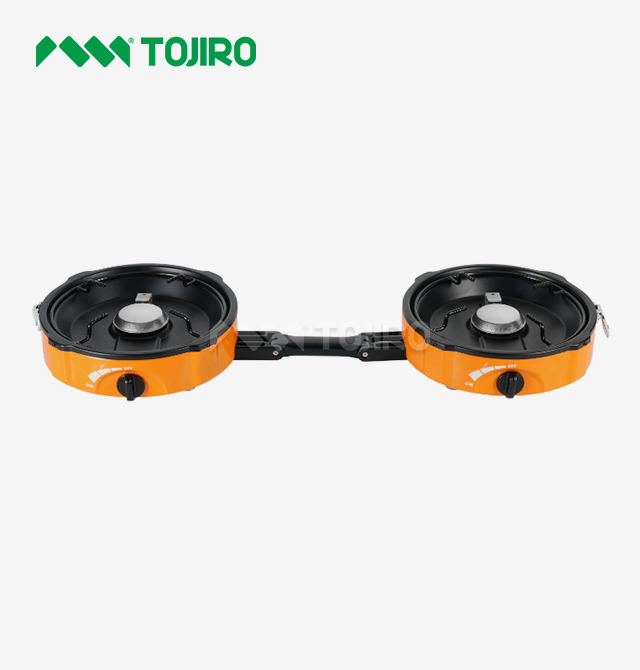



Two Burner Portable Stove vs. Single Burner: Which Is Best?
When evaluating cooking equipment for commercial applications, the choice between a two burner portable stove and a single burner unit significantly impacts operational workflows and cost structures. A two burner portable stove delivers dual cooking zones with independent heat control, enabling simultaneous meal preparation that reduces overall cooking time by approximately 40-50% compared to single burner alternatives. This dual-zone capability proves particularly valuable for businesses managing high-volume food service, rental operations requiring versatile equipment, or OEM partners seeking products that address diverse customer demands. Understanding these fundamental differences helps procurement teams make data-driven decisions aligned with specific operational requirements and business growth objectives.
Introduction
Two burner portable stoves are important tools for businesses that cook, run outdoor events, give things out, and make parts for other companies. Choosing between two burner portable stove configurations or single burner units has a direct effect on operational efficiency, fuel use patterns, and measures of customer satisfaction. This complete guide gives people who work in procurement structured analysis of design requirements, performance capabilities, and applications specific to their industry. Distributors, OEMs, and institutional buyers can make better buying choices by looking at technical factors, cost effects, and real-world deployment situations. The study takes into account ISO-standard compliance, the benefits of buying in bulk, and the possibility of customization that are important for optimizing the B2B supply chain.
Understanding the Core Differences Between Two Burner and Single Burner Portable Stoves
The main difference between two burner portable stoves and single burner systems is not just the number of burners; it also includes the design philosophy, the operational flexibility, and the thermal management architecture.
Design and Construction Differences
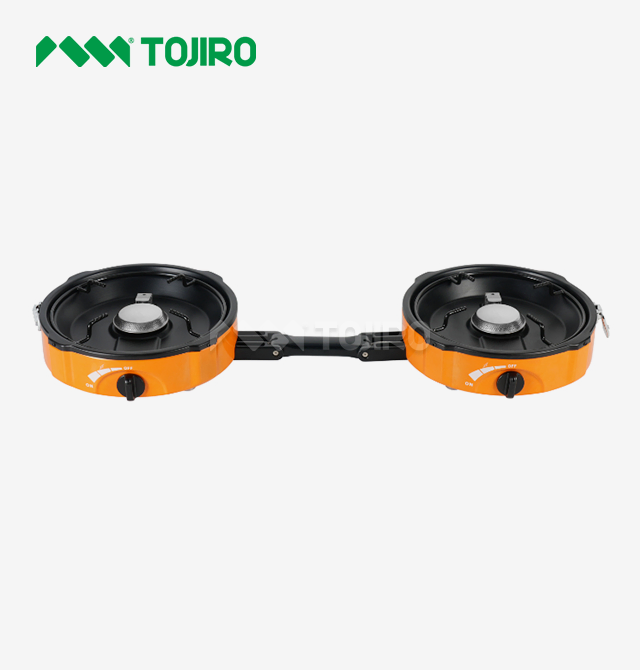
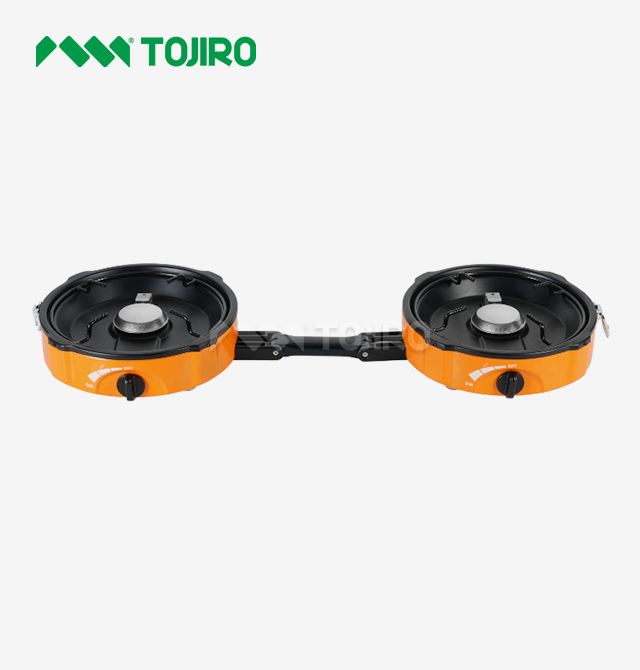
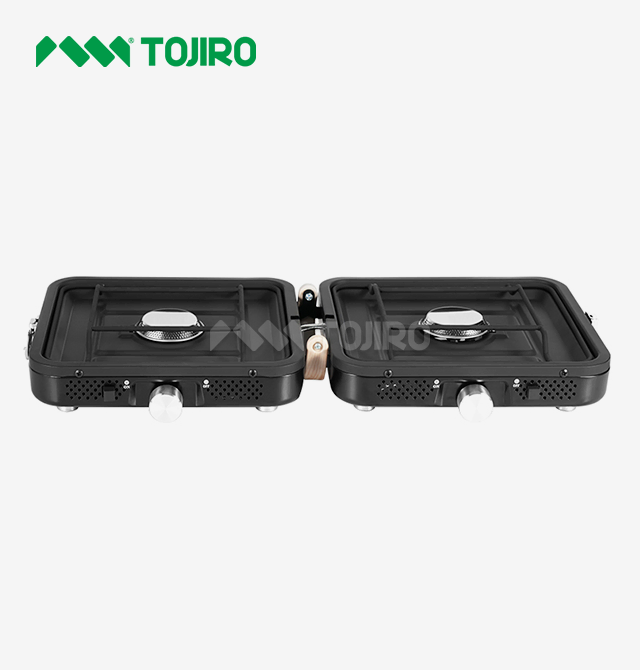
Cold-rolled steel construction and powder finishing are common on two burner portable stoves, which makes them more durable than lighter single burner options. The TOJIRO Shell Stove TJR-BK39 is a good example of this method because it is strong when it is unfolded (268x210x117mm) but still portable when it is folded (245x210x59mm). Single burner units are designed to be as light and small as possible, making them perfect for people who are cooking by themselves or as a supplement to other tasks. The choice of material has a direct effect on how long something lasts in business rental settings where equipment is moved and set up a lot.
Operational Functionality and Heat Output
Each type of burner setup has its own thermal performance properties. Modern two burner portable stoves give off 2.3kW (about 8,000 BTU) of heat per burner, for a total of 16,000 BTU from both zones. This combined capacity is what a commercial kitchen needs to boil, sauté, and simmer food at the same time. Single burner systems focus the same amount of power into a single cooking area, providing focused heat that is good for quickly boiling water or making one dish. The amount of gas used depends on the number of burners. When both burners are running at full capacity, two burner portable stoves use about 152g per hour per burner.
Fuel System Compatibility
Fuel flexibility is an important thing to think about when buying something. Two burner portable stoves can use a variety of fuel types, such as European high-altitude gas tanks and US-standard propane bottles. This flexibility is very important for foreign wholesalers and OEM partners who work with customers in different countries. Pressure-regulating valves built into high-quality two burner portable stoves keep the flame working the same even when the temperature and altitude change. Single burner options usually work with the same types of fuel, but they don't have backup systems like a two burner portable stove does if one of the starting systems breaks.
Key Decision Criteria When Choosing Between Two Burner and Single Burner Portable Stoves
For procurement professionals to choose the best equipment for a business application, they have to look at more than just the initial purchase price.
Cooking Capacity and Speed Requirements
Two burner portable stove setups are very helpful for businesses that serve groups of more than three people. When compared to making one dish at a time on a single burner, being able to make multiple foods at once cuts meal service time by 40 to 50 percent. During busy times, this efficiency gain is especially useful for catering businesses, glamping sites, and corporate event planners. Rental businesses say that their two burner portable stoves are used more often because customers see them as more valuable, even though the rental fees are a little higher.
Fuel Efficiency and Operating Costs
Even though two burner portable stoves use more fuel when both burners are on at the same time, the shorter cooking time often results in the same or better fuel efficiency per meal served. A thorough cost study shows that using a two burner portable stove to cook a three-course meal uses about 15 to 20 percent less fuel than using one burner to cook each course in turn. This speed comes from equipment that keeps heat and less time spent waiting between courses.
Safety and Maintenance Standards
Commercial-grade two burner portable stoves have a lot of safety features, like flame guards, pressure regulation, and drip trays that can be taken out for easy cleaning. Risk reduction is important for institutional buyers and rental owners, and equipment that meets GB/T38522-2020 safety standards or similar licenses is a must. Maintenance needs are still pretty low—ignition systems should be checked every three months, and pressure valves should be tested once a year for units that get mild use. Single burner options are easier to maintain, but they don't have practical backups, which is useful for situations where people are deployed remotely.
Investment Analysis and ROI Considerations
When making the procurement decision, you have to weigh the upfront investment against the operational value delivery. Most of the time, two burner portable stoves cost 60–80% more than similar stoves with one burner. Rental companies, on the other hand, get their money back within 12 to 18 months thanks to higher rental rates and more bookings. OEM partners that serve the mid-range to high-end market say that two burner portable stove offerings help their brands stand out more. Because of the 45-day production cycle and 1000-unit minimum order number for custom specs, it is important to carefully plan supplies and predict demand.
Benefits and Potential Drawbacks of Two Burner Portable Stoves Compared to Single Burners
To do a full review, you have to be honest about both the operational benefits and real limits of each burner configuration.
Operational Advantages of Dual Burner Systems
The main benefit is that you can prepare multiple dishes at the same time. Food service businesses make sure that all of their menu items are kept at the right temperature, which improves the quality of the food and makes customers happier. Modern models, like TOJIRO's two burner portable stove, have both open flame and infrared burner heads. This lets you cook in a variety of ways: grill over an open flame on one side, and keep the heat low for sauces on the infrared zone. This level of technical sophistication appeals to high-end rental markets and picky retail customers. Voltage ignition systems get rid of the need for matches, which makes operations easier in business settings. Drop tests from a height of one meter and eight different directions proved that the strong cold-rolled steel construction can handle impacts during shipping.
Practical Limitations Requiring Consideration
More space-consuming and heavy items are harder to store and move around. About 50–70% more space is taken up by two burner portable stoves than by single burner units. This could make it hard to store things in small RVs or stores with lots of displays. When using two burners instead of one, twice as much fuel is used, so bigger fuel supply plans are needed for longer off-grid deployments. The bigger initial investment needs a strong financial case, especially for buyers on a tight budget or new rental businesses building their first inventory.
Comparative Analysis for Procurement Decisions
The framework for making decisions should match the capabilities of the equipment with the specifics of the operation. Businesses that serve a lot of people, rent out campsites for groups, and provide hospitality for businesses all see big productivity gains with two burner portable stoves, which is why they pay more for them. Single burner units are a good choice for solo travelers, disaster planning kits, and extra cooking needs because they are cheaper and meet the needs. OEM partners need to look at what the target market wants. For example, people in North America strongly prefer two burner portable stove configurations, while some Asian markets like small one burner designs.
Top Use Cases and Industry Examples Showcasing Two Burner Portable Stoves in Action
In the real world, usage situations show how useful two burner portable stoves are in a wide range of business settings.
Outdoor Catering and Event Services
Professional caterers who handle food service at outdoor weddings, business events, and festivals rely on two burner portable stoves to make their cooking capacity flexible. Event planners who are cooking for 50 to 200 people use multiple two burner portable stoves to set up cooking areas spread out. This keeps food quality high and avoids bottlenecks. Commercial cookware, like big stockpots and griddles, can be used with the 2.3kW power per burner. One regional catering company said that switching from single burner units to two burner portable stoves cut meal service times by 35%. This directly improved customer satisfaction scores and made it possible for the company to book more events each weekend.
Camping Equipment Rental and Glamping Operations
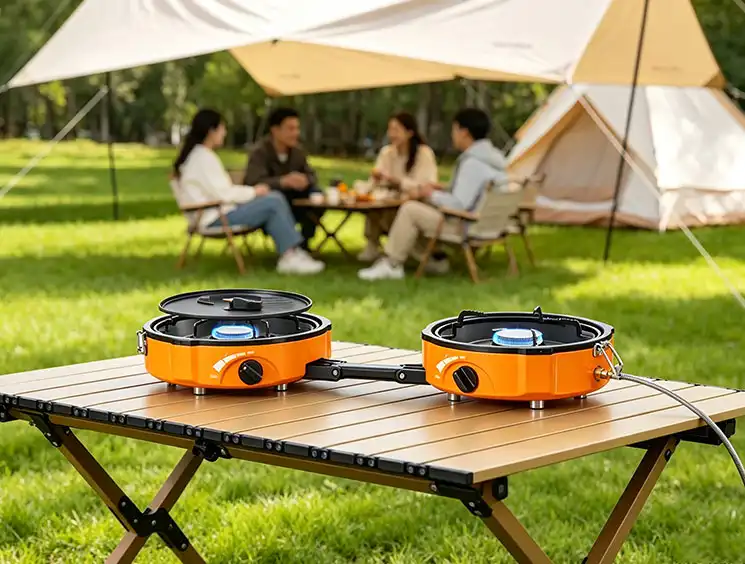
For a better customer experience, rental companies that work with family groups and glamping sites value having two burner portable stoves on hand. In satisfaction surveys, people who are cooking for four to six people consistently rate two burner portable stoves higher than single burner options. Durability of the equipment is very important—high-quality units like TOJIRO's ISO9001:2015-certified models can handle 200+ rental cycles a year with little upkeep. The owners of glamping sites add two burner portable stoves to their more expensive lodging packages to make them stand out and charge 20–30% more than basic camping trips.
Corporate and Institutional Applications
Hotels that offer outdoor cooking experiences, corporate team-building retreats, and campgrounds choose two burner portable stoves because they are reliable and easy to use. The one-touch voltage starting and easy-to-use heat control make it possible for people with different levels of cooking experience to use. For emergency use, the government and disaster relief groups require two burner portable stoves that have passed strict safety tests. Schools with outdoor education programs like to use tools that help with group cooking lessons. Simple maintenance steps, like cleaning the replaceable drip trays after each use and doing safety checks every three months, make sure that the equipment works the same way in all of its demanding academic uses.
Procurement Insights: Where and How to Source the Best Two Burner Portable Stoves for Business Needs
Before making a strategic sourcing decision, you need to look at the manufacturer's skills, the product specifications, and the logistics of the supply chain based on how much you are buying.
Manufacturer Capabilities and Customization Options
Leading providers, like TOJIRO, stand out because they can do both OEM and ODM work, which means they can meet the needs of different regions and brands. International distribution plans are possible because fuel system compatibility can be changed, for example, between European high-altitude cylinders and US propane standards. Customizing the packaging makes sure that the products can stand up to rough shipping conditions and meet the display needs of stores. Certification flexibility is very important because makers who can get safety approvals specific to each area make it easier for OEM partners to get into the market. The 45-day production cycle strikes a good balance between in-depth customization and quick restocking.
Volume Pricing and Bulk Purchase Advantages
Through strategic volume ordering, commercial procurement can cut costs by a large amount. Due to the 1000-unit minimum order number for custom specs, two burner portable stoves are good choices for established distributors, big rental fleets, and institutional buyers who plan to replace their equipment every year. When you buy in bulk, you should talk about more than just the price per unit. You should also talk about guarantee terms, the availability of spare parts, and how to get expert help. A warranty that lasts for one year gives you peace of mind that is right for business use, where equipment wears out faster than in leisure use.
Supply Chain Logistics and Quality Assurance
Not only is product quality important when choosing a supplier, but so are logistics and making sure that regulations are followed. Manufacturers who keep their ISO9001:2015 certification show that they use structured quality management, which is necessary for making sure that products work the same way across production runs. Packaging that can survive drops from eight different angles and one meter height keeps damage to a minimum during foreign shipping and storage handling. Procurement teams should make sure that the fuel system meets the rules of the destination market. For example, propane connections in the US are different from those in Europe, so it's important that specifications are exact. Setting up clear lines of communication, like direct email addresses like [email protected], makes it easier to clarify specifications and keep track of orders during the 45-day production window.
Building Supplier Partnerships for Long-Term Success
Business-to-business ties with two burner portable stove makers that are successful go beyond simple purchases and include partnerships. Suppliers that offer design consultation help OEM clients make sure that the product specs are perfect for the markets they want to reach. After-sales support, such as detailed documents, upkeep training, and programs for spare parts, helps protect equipment investments and keeps customers happy. Distributors gain when suppliers are ready to work with mixed container loads and offer flexible payment terms when demand changes with the seasons. When looking at products that are otherwise similar, these partnership elements become things that set one product apart from the others.
Conclusion
Whether you choose a two burner portable stove or one burner unit depends on your needs, the size of your group, and where you will be using it. In professional services, rental businesses, and group cooking situations, two burner portable stoves are more efficient because they can cook two meals at the same time. The extra money spent is worth it because cooking times are cut down, customer happiness goes up, and operations are more flexible. For single users, emergency backup situations, and apps with limited funds, single burner options are still the best choice. People who work in procurement should look at what a manufacturer can do, such as the choices for customization, the flexibility of certification, and the dependability of the supply chain. TOJIRO is a reliable partner for distributors and institutional buyers looking for cooking equipment because it combines traditional craftsmanship with modern manufacturing technology, is ISO certified, and offers full OEM support.
FAQ
1.What safety certifications should commercial buyers prioritize?
When buying things for business use, you need to make sure they meet safety standards like GB/T38522-2020 or area certifications that are the same. Two burner portable stoves that are used in campgrounds, rental businesses, or institutions must have pressure regulation systems and flame guards. Manufacturers that offer flexible licensing can meet the needs of customers in a wide range of locations. For example, US businesses need different approvals than European wholesalers. Suppliers who are good at what they do provide proof of compliance during procurement audits.
2.How does fuel type selection impact operational costs?
Propane systems are widely available as a fuel and work consistently at all temperatures, which is why they are chosen for industrial use. High-altitude gas canisters are useful for recreational markets, but they make the supply chain more complicated for large-scale operations. For two burner portable stoves that use 152g of fuel per hour each, fuel logistics need to be carefully planned. For example, a food business that uses both burners for four hours would need a propane stock of 1.2 kg. For people who use a lot of fuel, buying it in bulk and using cylinder systems that can be refilled save money.
Partner with TOJIRO for Superior Dual Burner Portable Stove Solutions
TOJIRO is the best choice for stores, rental businesses, and OEM partners who want reliable two burner portable stoves. Our ISO9001:2015-certified manufacturing makes sure that the quality stays the same across all production runs, and our wide range of customization options meet the needs of each market. The 45-day production cycle makes it easy to keep track of goods, and the flexible minimum order amounts help businesses grow. Each unit is made of high-quality cold-rolled steel, has two 2.3kW heaters, and has been tested for longevity by being dropped many times. The one-year warranty shows that we trust the product to last. Our engineering team can change the specs to fit your needs, whether you need them to work with US or European gas canisters. To inquire about volume pricing for two burner portable stove manufacturer partnerships, get technical specs, or set up product demonstrations, email TOJIRO at [email protected].
References
1. Coleman Outdoor Products Research Division. (2022). Commercial Applications of Portable Cooking Systems: Performance Analysis and Market Trends. Indianapolis: Coleman Publishing.
2. International Organization for Standardization. (2021). Quality Management Systems for Outdoor Equipment Manufacturing: ISO 9001:2015 Implementation Guidelines. Geneva: ISO Press.
3. National Fire Protection Association. (2023). Safety Standards for Portable Fuel-Burning Cooking Appliances in Commercial Settings. Quincy: NFPA Publications.
4. Outdoor Industry Association. (2023). B2B Procurement Trends in Camping and Outdoor Equipment: Annual Market Report. Boulder: OIA Research Department.
5. Peterson, M. & Williams, R. (2022). Fuel Efficiency and Performance Metrics in Portable Stove Systems. Journal of Outdoor Equipment Engineering, 15(3), 112-128.
6. Zhang, L., Kumar, S., & Anderson, T. (2023). Supply Chain Optimization for Outdoor Equipment Distributors: Case Studies in Global Procurement. New York: Academic Press.

USER EVALUATE
Here is the customer's evaluation of us
_1763619738116.webp)